
Supreme Court Upholds Use of Pellet Guns Amid Protests

Supreme Court's Ruling on Pellet Guns
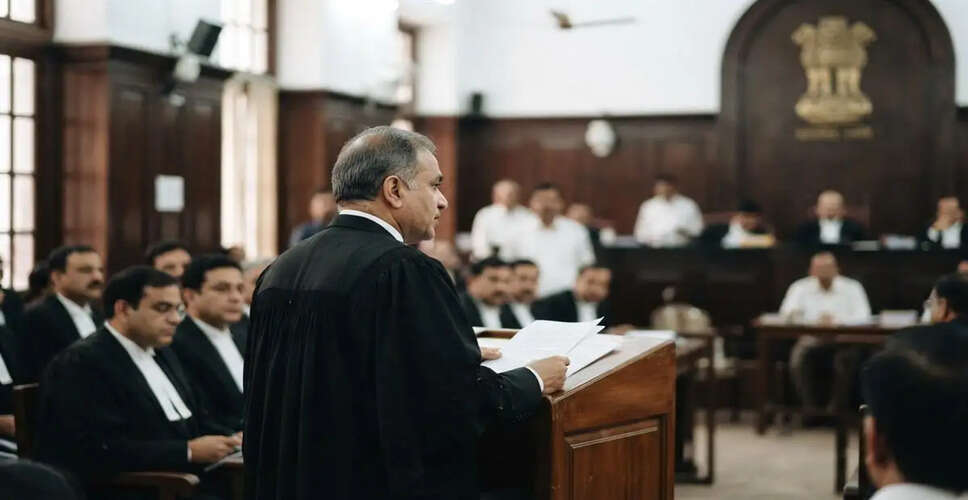
On Thursday, the Supreme Court stated that a ban on pellet guns cannot be enforced as long as current guidelines permit their use by security agencies for crowd control in specific situations. However, the court clarified that any allegations of misuse would be investigated on a case-by-case basis. This ruling came in response to a petition regarding the use of pellet guns during recent student protests in Delhi against the leak of the National Eligibility cum Entrance Test (NEET) question paper. The court directed the central government to maintain a record of the weapons used by the Rapid Action Force (RAF) deployed at Jantar Mantar.
Legal Framework for Pellet Gun Usage
The court noted that according to the Bureau of Police Research and Development (BPRD) guidelines, police are authorized to use pellet guns in extraordinary circumstances. It deemed the request to impose a complete ban on pellet guns as 'vague.' The bench, comprising Chief Justice of India D.Y. Chandrachud, Justice Joymalya Bagchi, and Justice V. Mohan, considered arguments presented by senior advocate Vrinda Grover on behalf of the petitioners and instructed the Delhi government to ensure better medical treatment for those injured by pellet guns during the protests on July 20.
Concerns Over Public Safety
Justice Bagchi remarked that while the petition opposes the use of pellet guns, their deployment is permitted under police regulations in special circumstances. He indicated that if the petitioners wish to phase out the use of pellet guns, they must challenge the provision under Article 21 (right to life). Former Central Information Commissioner and retired IPS officer Yashovardhan Azad, along with two individuals injured by pellet guns, approached the Supreme Court seeking a complete ban on their use for maintaining law and order.
Court's Response to the Petition
The bench issued notices to the central government and the Inspector General of Police of the RAF regarding the petition filed by Azad and the two victims. At the hearing's outset, Justice Bagchi stated that the request for a total ban on pellet guns was 'vague' since the petition did not challenge the police regulations that allow for such weapons. Grover argued that these regulations are not readily accessible to the public and requested the bench to direct the central government to present them in court.
Details of the Incident
Reports indicate that Azad and Mansoori sustained injuries from pellets during a 'March to Parliament' organized by the Cockroach Public Party (CAZPA) on July 20. Grover mentioned that metal pellets were used in their cases and had to be surgically removed from their bodies. She clarified, 'I am not saying that the RAF should not have pellet guns in their arsenal; the issue here is the use of metal pellets.' The bench expressed its willingness to examine the legality of pellet gun usage in specific incidents, but the petitioners must demonstrate whether the use of pellet guns was justified under the 'graduated response' necessary for maintaining law and order.
Legal and Ethical Implications
The senior advocate emphasized that their request for relief was limited to the use of metal pellets. She stated, 'There is no permanent order from the Delhi police that permits the use of pellets. This is my concern, which is why I have to rely on the BPRD guidelines.' If such an order exists, the central government should present it to the court. Grover expressed her belief that the central government and Delhi police would not want to use pellets against innocent youths.
Government's Assurance
Solicitor General Tushar Mehta assured the bench that the government would provide any necessary assistance. Grover pointed out that the Supreme Court had previously ordered the preservation of CCTV footage, drone footage, body camera footage, and wireless logs on July 28, but did not specifically mention the preservation of records regarding the RAF's weapon usage. In response, the Solicitor General stated that all necessary materials for the investigation would be preserved.
Potential for Violence in Protests
The bench acknowledged that peaceful protests could escalate into violence, potentially allowing for the infiltration of anti-social elements, necessitating a graduated response from law enforcement agencies. Azad requested a ban on the use of fully or partially metal pellets fired from pump-action or projectile-action guns for dispersing crowds, arguing that such weapons fundamentally contradict constitutional standards related to the use of force. The petition also sought appropriate compensation, medical treatment, and rehabilitation for all individuals allegedly injured during the incident.
Allegations of Excessive Force
According to the petition, during the protests, the RAF, which was deployed to assist the Delhi police, initially used tear gas and resorted to baton charges. Subsequently, they fired metal pellets from a pump-action gun near Connaught Place. The petitioners alleged that no prior warning or public announcement was made before escalating the use of force, resulting in serious injuries to several protesters, including eye injuries.
Risks Associated with Pellet Guns
The petition highlighted that while pellet guns are often described as 'less lethal' weapons, they can disperse a large number of pellets over a wide area, making it impossible to target a single individual accurately. This raises significant risks of severe injuries to the eyes and other vital body parts.