
Supreme Court Upholds Election Commission's Voter List Amendment Process
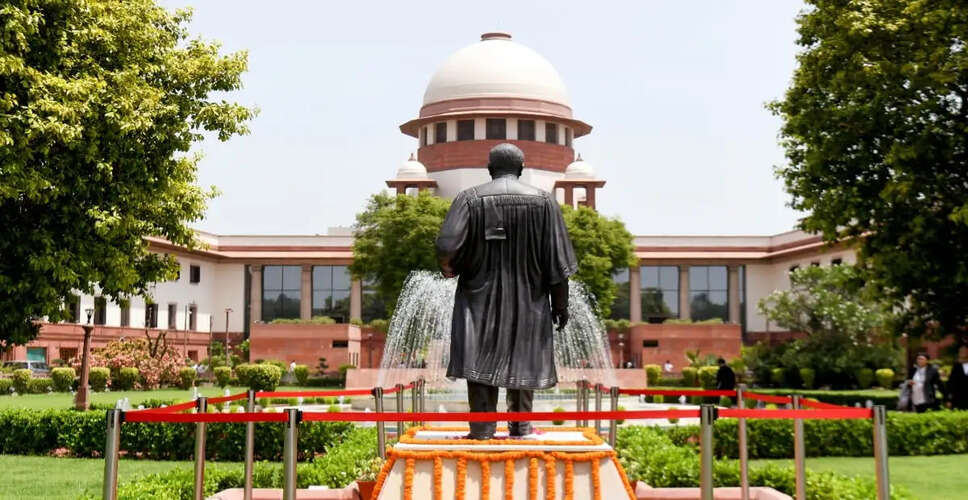

Significant Ruling for Election Integrity
In a landmark decision, the Supreme Court has granted a major relief to the Election Commission of India (ECI) in its efforts to ensure free and fair elections. On Wednesday, May 27, 2026, the court ruled that the ECI's process for 'Special Intensive Revision' (SIR) of voter lists is "legally valid." The court emphasized that this procedure strengthens the constitutional requirement for impartial elections and does not create any hindrance.
This ruling comes just three days before the commencement of the third and final phase of SIR, set to begin on May 30, 2026, across 16 states and three Union Territories.
Judicial Scrutiny of Election Commission's Authority
A bench led by Chief Justice D.Y. Chandrachud and Justice Joymalya Bagchi examined whether the Election Commission had the authority to conduct this process under Article 326 of the Constitution, the 'Representation of the People Act, 1950,' and related regulations.
Delivering the verdict, the Chief Justice stated, "We are fully satisfied that the objectives sought to be achieved through SIR are directly related to the constitutional goal of conducting free and fair elections."
Court's Endorsement of the SIR Process
The court upheld the process initiated in Bihar and later expanded to other states, asserting that the controversial SIR does not undermine the constitutional obligation for fair and free elections.
The bench clarified that SIR does not violate existing electoral laws, stating, "On the contrary, it invigorates the constitutional mandate under Article 324, operating within the precise legal boundaries set by Section 21(3)."
Rejection of Opposition Concerns
The bench further noted, "Therefore, it cannot be said that the Commission has acted beyond its legal powers." The Supreme Court made it clear that the process cannot be invalidated simply because its methodology differs from the standard amendment process.
This ruling was a setback for opposition parties, who had vehemently opposed the amendment process due to concerns over its timing and the potential removal of names.
Background of the SIR Process
The SIR was first launched in June 2025 in Bihar, just five months before the state assembly elections. Following this process, over 6 million names were removed from the voter lists, including those of deceased voters. In West Bengal, nearly 9 million names were eliminated before the assembly elections.
Under this initiative, voters whose names were not on the 2002 or 2003 voter lists were required to provide documentary evidence linking them to individuals listed in those older records. Initially, the ECI approved 11 documents for verification, excluding Aadhaar. However, the Supreme Court directed the Election Commission to include Aadhaar among the acceptable documents.
Defending the Voter Verification Process
Despite accusations from the opposition regarding voter suppression and bias, the ECI has consistently defended the SIR process. The Commission described it as a necessary verification campaign under the Constitution, aimed at maintaining the integrity of voter lists and preventing non-citizens from voting.