
Supreme Court Upholds ECI's Decision on West Bengal Bureaucratic Transfers Ahead of Elections
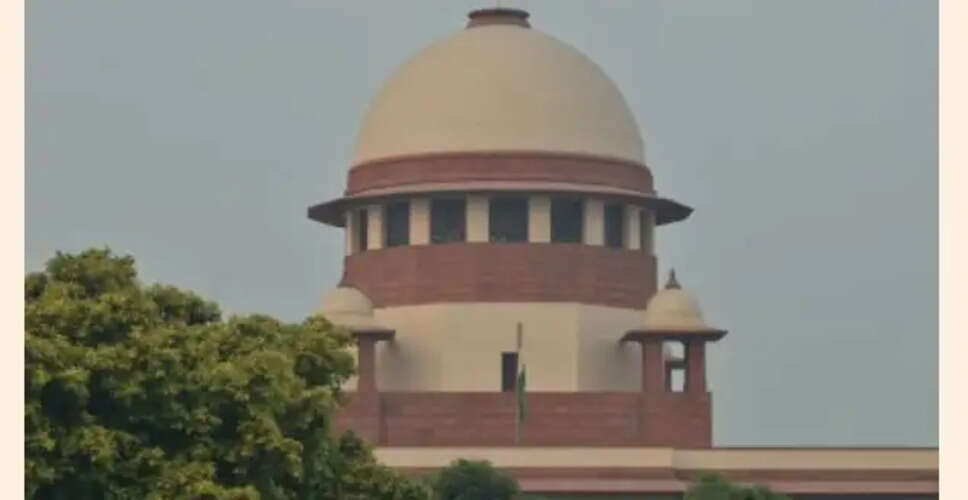

Supreme Court's Ruling on Election Commission Transfers
New Delhi: On Thursday, the Supreme Court declined to intervene in the Calcutta High Court's ruling that supported the Election Commission of India's (ECI) decision to transfer numerous senior bureaucrats and police officials in West Bengal in preparation for the upcoming Assembly elections. The court noted that such personnel changes prior to elections are standard practice.
A bench led by Chief Justice of India (CJI) Surya Kant dismissed the petition challenging the extensive transfers mandated by the ECI, emphasizing that such actions are routine and have occurred in various states previously.
During the proceedings, senior advocate Kalyan Bandopadhyay, representing the petitioner, argued that the ECI executed these transfers without consulting the West Bengal government, claiming this was against the legal framework.
However, the CJI remarked that these transfers are not unusual, stating that having an external observer is often beneficial for ensuring fair elections.
The petitioner maintained that consulting the state government was essential, highlighting that even the Chief Secretary was replaced without agreement for the first time.
While the Supreme Court acknowledged some merit in the argument regarding the need for state consultation, it chose not to intervene due to the imminent Assembly elections, leaving the legal question open for future consideration.
The bench indicated that such matters could be revisited later, clarifying its reluctance to interfere at this stage.
The petition had contested the Calcutta High Court's decision to dismiss a public interest litigation (PIL) against the ECI's transfer of key officials, including the Chief Secretary, Director General of Police (DGP), Home Secretary, and several District Magistrates and Superintendents of Police.
In its judgment on March 31, the Calcutta High Court noted that the petitioner had acknowledged the ECI's authority to transfer officials to facilitate free and fair elections. The court stated that once this power was recognized, it was not inclined to conduct a 'roving enquiry' into the ECI's authority regarding these transfers.
The Calcutta High Court also pointed out that the state administration had not experienced any 'administrative numbness' or paralysis due to the transfers, as they were replaced by other officials, including some of higher rank.
Furthermore, the court ruled that the action could not be deemed arbitrary or mala fide simply because a significant number of officers were shifted, especially since similar actions are commonplace across the nation.
The PIL filed in the Calcutta High Court argued that the mass transfers compromised the authority of the elected state government and disrupted the administrative framework. This controversy began in March when the ECI ordered extensive transfers of top officials in West Bengal following the implementation of the Model Code of Conduct ahead of the Assembly elections, prompting objections from the state government. Chief Minister Mamata Banerjee accused the ECI of acting unilaterally and undermining the elected government's authority.