
Supreme Court to Review Plea for Enhanced Protections for Minors on Social Media

Supreme Court's Consideration of Minors' Online Safety
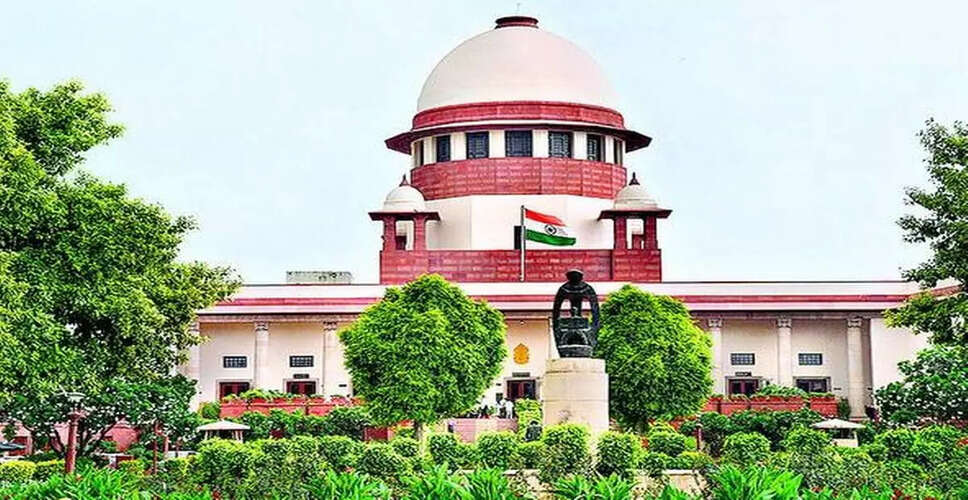
File image of the Supreme Court of India. (Photo: X)
New Delhi, Sep 10: On Thursday, the Supreme Court agreed to examine a petition advocating for enhanced protections for minors using social media and digital platforms. The plea calls for a prohibition on these platforms from entering into agreements with individuals under 18 years of age without obtaining consent from a parent or guardian.
A bench led by Chief Justice Surya Kant, along with Justices Joymalya Bagchi and V Mohana, issued notices to the government and other parties regarding the request made by the NGO Just Rights for Children Alliance. The bench remarked, “We need some safeguards in India,” while issuing the notices.
Senior advocate HS Phoolka represented the NGO, which is seeking changes to the Information Technology (Intermediary Guidelines and Digital Media Ethics Code) Rules, 2021, or the establishment of specific guidelines to ensure that digital platforms do not engage with minors without parental consent.
The petition raised alarms about minors' access to digital platforms, noting that while India recognizes individuals under 18 as children, platforms like Facebook and Snapchat permit account creation from the age of 13.
Additionally, the plea requests identity verification or electronic Know Your Customer (e-KYC) processes for parents or guardians before consent is granted.
During the proceedings, the bench emphasized the necessity for robust digital protections for children, stating that “firewalls are very necessary for children,” as reported by a news agency.
The NGO further argued that despite stringent laws against the distribution and storage of Child Sexual Exploitative and Abuse Material, internet platforms have not sufficiently implemented automated content-filtering systems and age-verification processes.
This plea arises amidst increasing global initiatives to limit or regulate children's access to social media. Countries like Brazil, Australia, and Indonesia have enacted laws prohibiting social media access for minors under 16, while the European Union is advancing towards stricter age verification and restrictions for children.
Currently, India lacks a specific law mandating a minimum age for social media access. However, the Digital Personal Data Protection Act requires social media platforms to secure verifiable parental consent before processing personal data of individuals under 18.
The urgency of this debate is underscored by the rising number of children with smartphone access. According to the Annual Status of Education Report (ASER) 2024, 82.2% of children aged 14 to 16 in India are capable of using smartphones.
Among these, 76% utilize smartphones for social media, while 57% use them for educational purposes.
The petition has raised concerns that unrestricted access may expose children to risks such as explicit content, cyberbullying, and other negative outcomes associated with social media engagement.