
Supreme Court to Hear Challenge Against CBSE's New Three-Language Policy
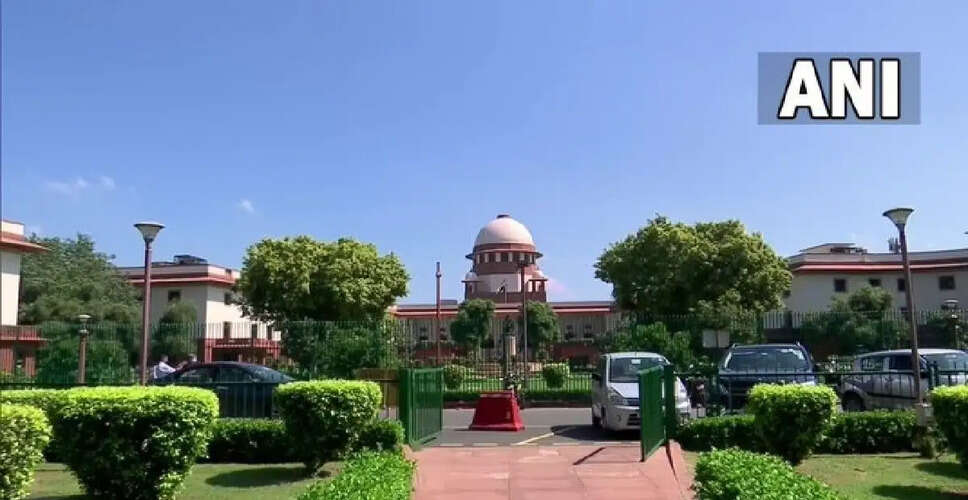

Supreme Court Takes Up CBSE's Language Policy
The Central Board of Secondary Education's (CBSE) recently introduced three-language policy has reached the Supreme Court. A public interest litigation (PIL) has been filed challenging this new policy. During the proceedings, advocate Mukul Rohatgi raised concerns about how students can suddenly learn these languages and sit for their Class 10 exams, warning that it could lead to chaos. The Chief Justice responded by stating that the court would hear the matter next week.
Previously, CBSE mandated the study of three languages for Class 9 students starting from July 1. However, there will be no board examination for the third language in Class 10. According to the circular, "From July 1, 2026, the study of three languages (R1, R2, R3) will be compulsory for Class 9, with at least two of these being Indian languages."
Details of the Three-Language Policy
As per the CBSE circular, in alignment with the National Education Policy (NEP) 2020 and the National Curriculum Framework for School Education (NCF-SE) 2023, at least two of the three languages must be of Indian origin. The language subjects will be organized into three levels: R1, R2, and R3. R1 (Language 1) will be the student's primary language, R2 will be a different language, and R3 (the third language) will become mandatory from Class 6 in the academic session 2026-27, fully implemented by 2030-31.
The languages chosen for R1 and R2 cannot be the same, and they should not be studied at multiple levels simultaneously. The CBSE notification specifies that the languages include India's two official languages—Hindi and English—along with 42 other languages. Additionally, other regional Indian languages and foreign languages will also be part of the curriculum, as outlined in the Eighth Schedule of the Indian Constitution.