
Supreme Court Takes Strong Action Against NCERT Over Controversial Textbook Chapter
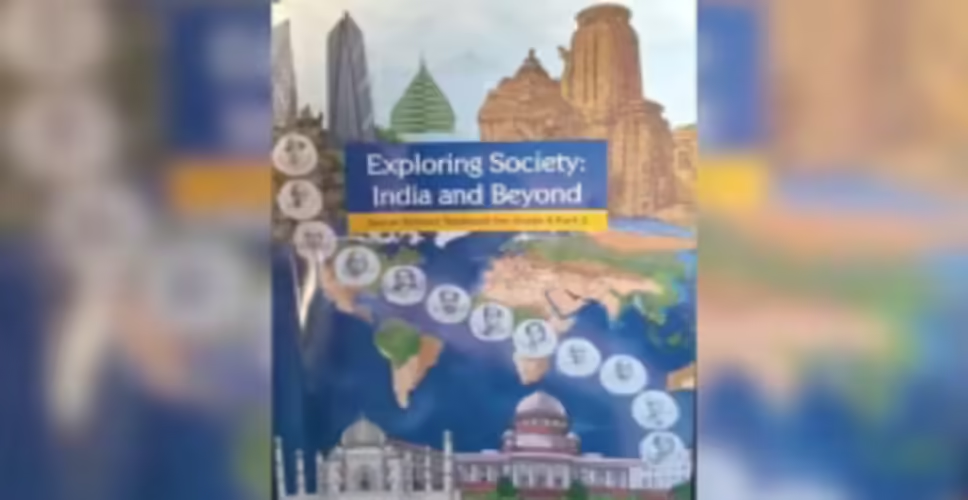
Supreme Court's Ruling on NCERT Textbook
New Delhi: On Thursday, the Supreme Court enacted a comprehensive ban on an NCERT textbook for class 8 that includes a chapter discussing corruption within the judiciary. The court mandated the immediate confiscation of all physical copies and the removal of its digital versions.
The Supreme Court instructed both central and state authorities to adhere to its orders without delay, cautioning that failure to comply could result in "serious consequences."
Show cause notices were issued to the NCERT director and the secretary of school education, requiring them to justify why they should not face repercussions for their roles.
Chief Justice Surya Kant, leading the bench, expressed concerns about a deliberate attempt to undermine the judiciary's integrity.
The bench noted that such actions could be classified as criminal contempt due to their lasting effects on the judicial system.
"We need to investigate this matter further," the bench stated.
The court emphasized that unchecked actions like these could diminish public trust in the judiciary, asserting, "No one will escape accountability."
CJI Surya Kant remarked, "As the head of this institution, it is my responsibility to identify those accountable; heads must roll."
He indicated that there seems to be a well-orchestrated conspiracy aimed at tarnishing the judiciary's reputation.
The Supreme Court criticized the NCERT's communication from Wednesday, noting the absence of an apology and the attempt to justify the controversial content.
Initially, Solicitor General Tushar Mehta offered an unconditional apology on behalf of the Ministry of Education.
The bench has scheduled the next hearing for March 11.