
Supreme Court Takes Action to Expedite Electoral Roll Revision in West Bengal
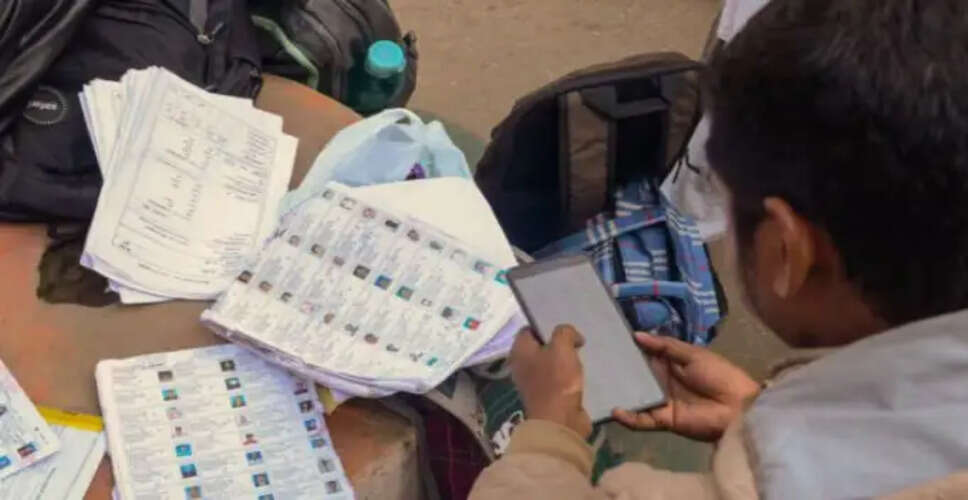
Judicial Support for Electoral Roll Revision
New Delhi: On Tuesday, the Supreme Court granted permission for the Chief Justice of the Calcutta High Court to assign civil judges and request judicial officers from the neighboring states of Jharkhand and Odisha. This decision aims to address the 8 million claims and objections arising from the ongoing Special Intensive Revision (SIR) of electoral rolls in West Bengal.
A bench comprising Chief Justice Surya Kant and Justices Joymalya Bagchi and Vipul M Pancholi acknowledged a letter from the Calcutta High Court chief justice, which indicated that the 250 district judges involved in the SIR process would require approximately 80 days to manage the claims and objections.
Recognizing the urgency of the situation, the bench approved the deployment of civil judges to facilitate the process.
The court instructed the Calcutta High Court chief justice to coordinate with his counterparts in Jharkhand and Odisha to requisition judicial officers of equivalent ranks to assist in this matter.
Furthermore, the Supreme Court mandated that the Election Commission (EC) cover the costs associated with deploying these judicial officers.
The apex court also permitted the EC to release the final electoral roll by February 28 and clarified that supplementary lists could be issued as the verification process continues.
Exercising its powers under Article 142, the court allowed the inclusion of voters in the supplementary electoral rolls to be part of the final list published by the EC on February 28.
Notably, discrepancies in linking progeny with the 2002 voter list have been identified, including mismatches in parental names and age differences between voters and their parents exceeding 15 years or being less than 50 years.
On February 20, expressing concern over the ongoing conflict between the West Bengal government and the EC, the Supreme Court issued an 'extraordinary' directive to deploy both current and former district judges to assist the EC in the contentious SIR process within the state.
The bench lamented the 'unfortunate blame game' and the 'trust deficit' between the EC and the 'democratically elected' Trinamool Congress government in West Bengal, issuing several new directives to ensure the timely completion of the SIR exercise.