
Supreme Court Takes Action Against Political Freebies: A Step Towards Electoral Integrity?
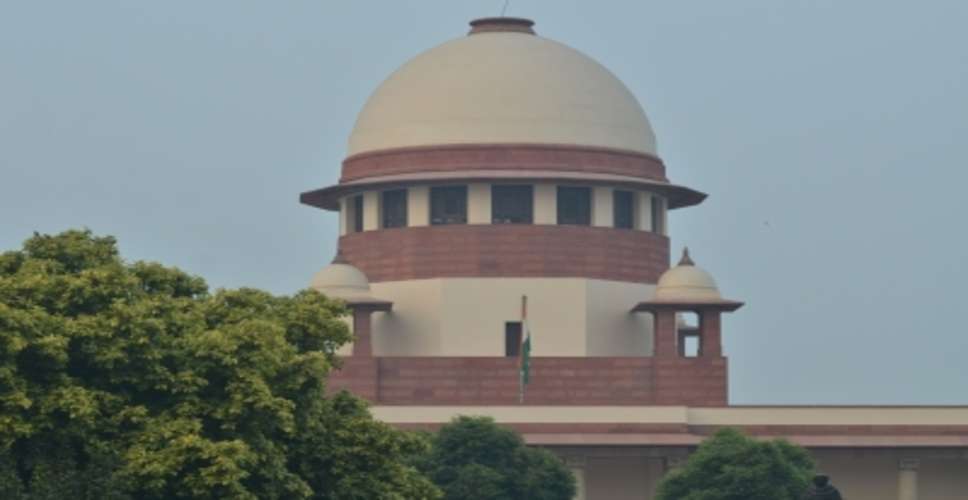

Supreme Court Issues Notice on Political Freebies
New Delhi: On Monday, the Supreme Court directed the Centre, the Election Commission of India (ECI), and the Comptroller and Auditor General (CAG) to respond to a Public Interest Litigation (PIL) that calls for a prohibition on the announcement of 'irrational freebies' by political parties during election periods.
A bench comprising Chief Justice of India (CJI) Justice Surya Kant and Justice Joymalya Bagchi indicated that this petition would be combined with other pending cases addressing similar concerns.
The PIL, submitted by advocate Narendra Goswami, argues that the promise or distribution of freebies funded by public resources as electoral incentives constitutes 'bribery' and a 'corrupt practice' as defined under Section 123(1) of the Representation of the People Act, 1951.
The petition emphasizes that this is not just a legal matter but a significant call to action to safeguard the integrity of the Indian Republic, warning that the nation risks becoming an 'auction house' where votes are traded for material benefits.
It further claims that the increasing trend of electoral promises, including cash payments and consumer goods, represents a 'systemic, sophisticated, and State-sanctioned bribe' that threatens the constitutional order.
The petition highlights that such practices create a transactional dynamic between voters and political parties, leading to quid pro quo arrangements that compromise the fairness of elections.
The petitioner cites financial data to support the argument that these schemes are economically unfeasible, noting that governments are resorting to borrowing to finance these freebies, thereby placing a burden on future generations.
Moreover, the PIL requests that the ECI require political parties to disclose the financial consequences of their promises through a 'Fiscal Impact Statement' and to take punitive measures, including de-recognition, against parties that fail to comply.
It also calls for the Supreme Court to revisit and potentially overturn its 2013 ruling in S. Subramaniam Balaji vs. State of Tamil Nadu, which mistakenly categorized election promises as mere policy decisions without considering their quid pro quo implications.
Additionally, the petition urges the CAG to conduct a performance audit of freebie schemes to determine if they fulfill the 'public purpose' requirement as outlined in Article 282 of the Constitution.
Importantly, the overarching issue of electoral freebies is already under review by the Supreme Court in a separate petition filed by advocate Ashwini Kumar Upadhyay.
In the 2013 Subramanian Balaji case, the Supreme Court ruled that the distribution of free color television sets by the DMK government post-Tamil Nadu Assembly elections did not qualify as a 'corrupt practice' under the Representation of the People Act.