
Supreme Court Takes Action Against Controversial NCERT Textbook on Judiciary
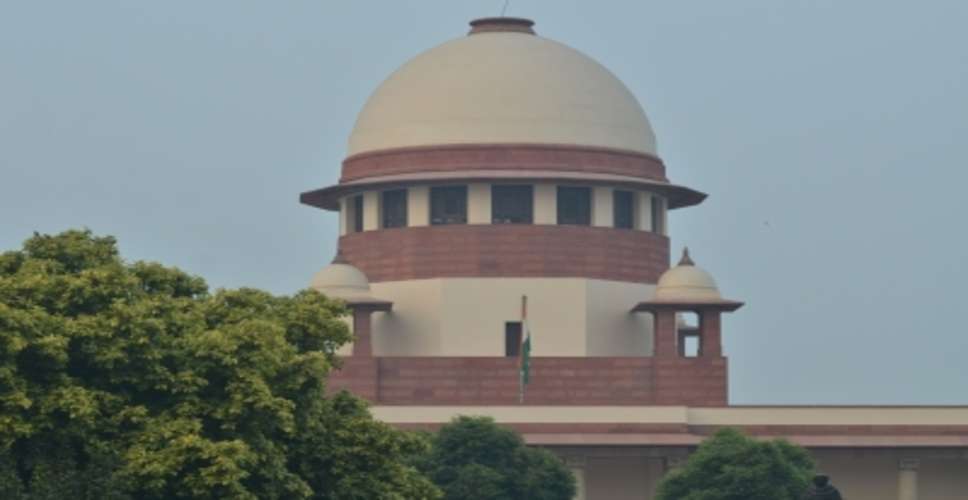
Supreme Court Responds to Media's Role in Exposing Textbook Issues
New Delhi: On Thursday, the Supreme Court expressed gratitude to the media for highlighting concerns regarding the NCERT's Class 8 social science textbook, which contains controversial content about judicial corruption. The court noted that without this media attention, the repercussions could have been 'irreversible'.
A bench led by Chief Justice Surya Kant, along with Justices Joymalya Bagchi and Vipul M Pancholi, issued a comprehensive ban on any further publication, reprinting, or digital sharing of the textbook, stating that the judiciary is currently 'bleeding' from the impact of the content.
During the proceedings of the suo motu case, one advocate suggested that the media should refrain from revealing the problematic sections of the textbook. However, the Chief Justice acknowledged the responsible role of the media in bringing the issue to light.
Solicitor General Tushar Mehta remarked that mainstream media typically acts responsibly, while tabloids often contribute to misinformation.
The Chief Justice emphasized the media's crucial role in upholding democratic values and constitutional principles, stating, 'Otherwise, the damage would have been completely irreversible.'
The bench noted that the Constitution's framers were acutely aware of the need for institutional autonomy among the legislature, executive, and judiciary to maintain the nation's democratic integrity.
The court expressed astonishment at a leading English newspaper's article published on February 24, which discussed the release of the controversial Grade 8 social science textbook titled 'Exploring Society: India and Beyond'.
The bench stated that the inclusion of such content in a foundational curriculum necessitates a thorough evaluation of its educational appropriateness and its potential effects on the judiciary's institutional reputation.
It pointed out that the chapter in question referenced numerous complaints against the judiciary, implying a lack of action, and selectively quoted a former chief justice's remarks about transparency and accountability issues.
The court criticized the textbook for dedicating an entire chapter to the judiciary's societal role while neglecting its historical significance and the essential functions it serves in upholding constitutional values.
The bench warned that exposing young students to a 'biased narrative' could lead to lasting misconceptions, especially at an age when they are still learning about public life and the constitutional framework.
It stressed that incorporating such uncontextualized material into a national middle school curriculum risks undermining institutional trust among students, educators, parents, and society as a whole.
The bench also acknowledged a recent press release from the National Council of Educational Research and Training (NCERT) and raised concerns about the sincerity of any apologies issued in light of the damage caused.
The court ordered the NCERT, in collaboration with educational authorities, to ensure the immediate withdrawal of all copies of the textbook from circulation, whether in physical or digital formats.
The bench instructed the Centre and its agencies to act swiftly to remove the book from all platforms and emphasized that the NCERT director and school principals are personally responsible for ensuring compliance.
They were also directed to prevent any further teaching based on the textbook's content and to provide a detailed report on the committee members who approved the controversial chapter, with the next hearing scheduled for March 11.