
Supreme Court Takes Action Against Child Labor in Entertainment Sector
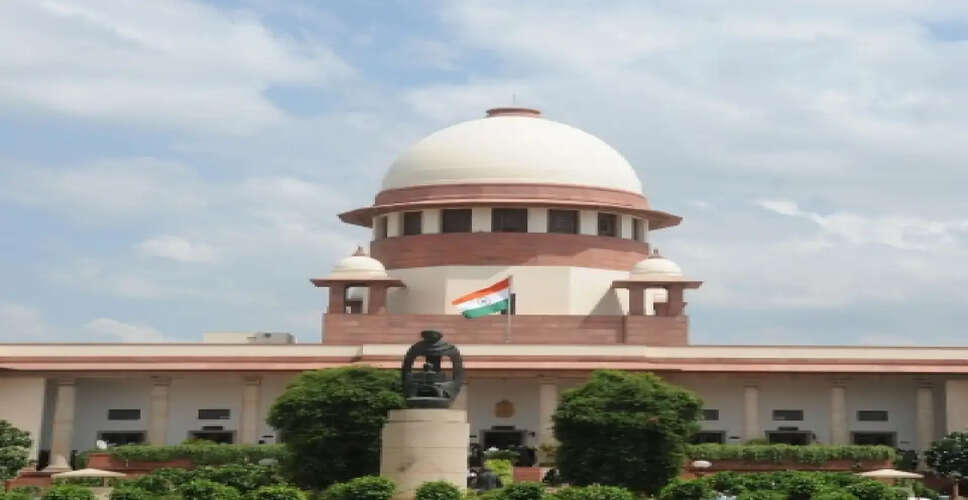

Supreme Court Addresses Child Employment Concerns
New Delhi: On Monday, the Supreme Court issued a notice to the Central Government, the National Commission for Protection of Child Rights (NCPCR), and the National Human Rights Commission (NHRC) regarding a petition that calls for a ban on child labor, particularly focusing on minor girls in venues like orchestras, dance bars, massage parlors, and spas.
A bench led by Chief Justice of India Surya Kant, along with Justices Joymalya Bagchi and Vipul Pancholi, recognized the gravity of the situation while addressing the public interest litigation (PIL) submitted by a non-governmental organization (NGO).
The petition challenges a significant oversight in the Child and Adolescent Labour (Prohibition and Regulation) Act, 1986 (CALPRA), which fails to categorize occupations such as orchestras, dance bars, and similar establishments as hazardous.
The petitioners argue that this exclusion has resulted in a lack of enforcement, allowing organized trafficking networks and exploitative businesses to thrive under the pretense of providing entertainment and wellness services.
The PIL requests that the government classify the employment of children under 18 in these sectors as prohibited hazardous work. It also calls for the development of a Standard Operating Procedure (SOP) for rescuing and rehabilitating children involved in such activities.
The petition highlights that minors, particularly girls, are often trafficked, confined, and subjected to coercion and sexual exploitation disguised as job opportunities.
It claims that children are forced to engage in sexually explicit acts for profit, putting them at risk of severe physical, psychological, and sexual harm.
Citing rescue operations conducted between March 2025 and May 2026 in states like Bihar, West Bengal, Rajasthan, and Delhi, the petition notes that 212 minors were rescued from orchestras and 12 from massage parlors and spas. These children, aged 10 to 18, were reportedly trafficked from various states, including West Bengal, Jharkhand, Uttar Pradesh, Assam, Chhattisgarh, and even Nepal.
The petition further asserts that these entertainment venues are increasingly exploited by trafficking networks for the sexual exploitation of young girls.
It emphasizes that children from disadvantaged communities are often deceived with false promises of employment, glamour, marriage, or financial support before being trafficked and subjected to abuse and forced labor.
This plea was filed by an NGO dedicated to fighting child trafficking, sexual exploitation, and child marriage throughout India.
Previously, the Patna High Court had also acknowledged this issue and issued a notice to the Bihar government regarding a plea for a complete ban on employing minors in orchestras and dance groups.