
Supreme Court Takes a Firm Stance on Delhi's Air Pollution Crisis
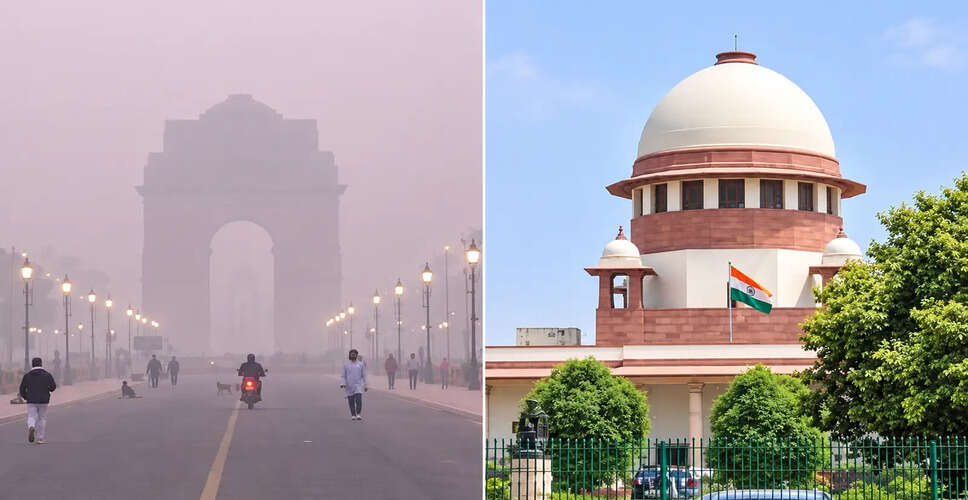

Supreme Court's Concerns Over Air Quality in Delhi
New Delhi: The Supreme Court has adopted a stringent approach regarding the escalating air pollution and toxic air in the capital. Expressing concern over the alarming pollution levels, the court questioned the government and relevant authorities about the measures taken to combat this issue. The deteriorating air quality in Delhi-NCR has increasingly troubled residents.
Supreme Court Hearing on Air Pollution
During a hearing on Friday concerning air pollution in Delhi-NCR, Chief Justice Suryakant voiced his worries about the worsening situation. The court emphasized the necessity for effective actions to address the pollution crisis in Delhi.
This concern arises at a time when the air quality in Delhi continues to decline, causing significant breathing difficulties for the populace.
Addressing Vehicle Emissions and Other Pollution Sources
The Supreme Court highlighted the need to focus on pollution caused by vehicles and the burning of crop residue. The court acknowledged that multiple factors contribute to pollution in Delhi-NCR, necessitating collaborative efforts from all stakeholders to find solutions.
Key contributors to pollution include emissions from vehicles, industrial activities, dust from construction sites, and crop burning. Therefore, a comprehensive strategy is essential rather than focusing on a single cause.
Call for Concrete Actions from Government and Authorities
In light of the Supreme Court's concerns, questions are being raised about the effectiveness of current pollution control measures. Improved coordination among the central government, Delhi government, and relevant agencies is crucial to combat pollution in Delhi-NCR.
Measures such as curbing vehicle emissions, controlling dust from construction, taking action against waste burning, and enhancing public transport are considered vital.
Annual Pollution Crisis in Delhi
Pollution levels in Delhi tend to spike during the winter months. Changes in weather, slow wind speeds, and pollutants from various sources exacerbate the situation.
Every year, government plans and restrictions are implemented to tackle pollution, yet a permanent solution remains elusive. Following the Supreme Court's strict stance, there is hope that relevant agencies will take decisive and effective actions to control pollution.
Currently, all eyes are on the pollution situation in Delhi-NCR. The court's hearing has once again underscored the urgent need for coordinated efforts to clean the capital's air.