
Supreme Court Sets Hearing Dates for Key Cases Involving Rahul Gandhi and Women Journalists
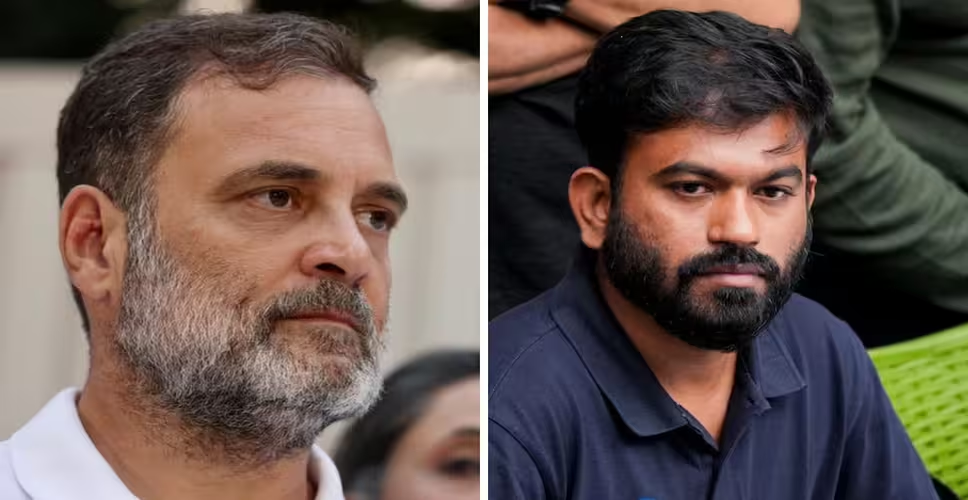

Significant Hearing Dates Announced by the Supreme Court
The Supreme Court of India has scheduled hearing dates for several crucial cases, including one involving Rahul Gandhi, a petition from women journalists, and a case related to protests at Jantar Mantar. Legal and political circles are closely monitoring these dates as the hearings approach, with all parties now awaiting the court's next steps.
Hearing for Rahul Gandhi's Case Set for October 27
The court will hear the case related to Rahul Gandhi on October 27. This hearing is expected to attract significant attention in political circles, as the Supreme Court's subsequent actions could be pivotal. The specific issues the court will address and the directives it may issue will depend on the petitions, available records, and the proceedings.
Women Journalists' Case Scheduled for November 5
The hearing concerning the women journalists has been set for November 5. The court's proceedings will be based on the issues presented and the demands made in the petitions. Key aspects such as freedom of expression, legal rights, and the surrounding circumstances will be crucial, but the core issues will become clearer through the details of the petitions.
Attention on Jantar Mantar Protest Case
The case related to the protests at Jantar Mantar is scheduled for hearing on November 3. This location has been a significant site for various political and social demonstrations. During the Supreme Court's hearing, the arguments from the involved parties and the legal aspects will be critical. The court's stance and future directives will only become clear after the hearing.
Monitoring Multiple Important Cases
With the hearing dates established, there will be ongoing scrutiny of the legal and political developments in the coming days. The hearings for Rahul Gandhi's case on October 27, the Jantar Mantar protest case on November 3, and the women journalists' case on November 5 are all set to unfold. However, the scheduling of these hearings does not guarantee a final decision on those days. The court may listen to the arguments, set further hearing dates, or issue directives based on the circumstances of each case. The final outcomes will only be clear after the actual court proceedings.