
Supreme Court Seeks Responses on RTE Law Implementation
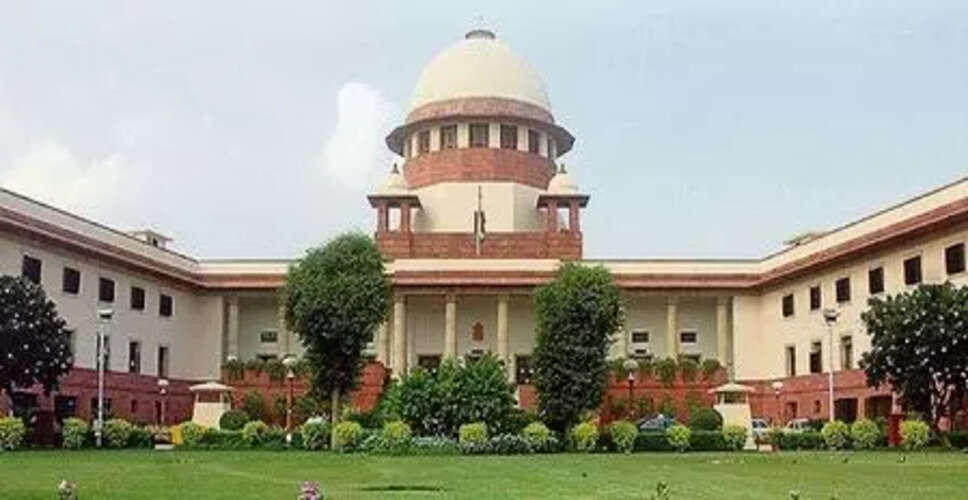

Supreme Court Addresses RTE Law
A file image of the Supreme Court (Photo: @IANS)
New Delhi, April 13: On Monday, the Supreme Court requested responses from the central government, state authorities, and union territories regarding a Public Interest Litigation (PIL) that calls for the enforcement of the Right to Education (RTE) Act, which guarantees free and compulsory education for children between the ages of 6 and 14.
A bench led by Chief Justice Surya Kant and Justice Joymalya Bagchi acknowledged the arguments presented by the lawyer representing the PIL petitioner, Haripriya Patel, who also advocated for the nationwide implementation of the new education policy.
“We are issuing notices and wish to explore this matter further,” stated the Chief Justice.
The lawyer highlighted that a significant concern is the enforceability of pre-primary education for children throughout the nation.
The PIL demands full enforcement of the Right of Children to Free and Compulsory Education Act, 2009, which stipulates free education for children aged 6 to 14, ensuring foundational education in local schools and requiring private institutions to allocate 25% of seats for underprivileged students.
All states and union territories, along with the central government, have been included as parties in this PIL.
The lawyer also brought attention to the implementation of the National Education Policy (NEP) 2020, which has undergone several updates.
The NEP serves as a comprehensive framework aimed at transforming the educational landscape, emphasizing flexibility, skill development, and holistic learning.
It replaces the traditional 10+2 system with a 5+3+3+4 model (ages 3-18), introduces vocational training starting from Grade 6, and prioritizes AI, coding, and multilingualism to cultivate a “knowledge superpower.”