
Supreme Court Seeks Response from Government on Uttarakhand Bar Council Petition
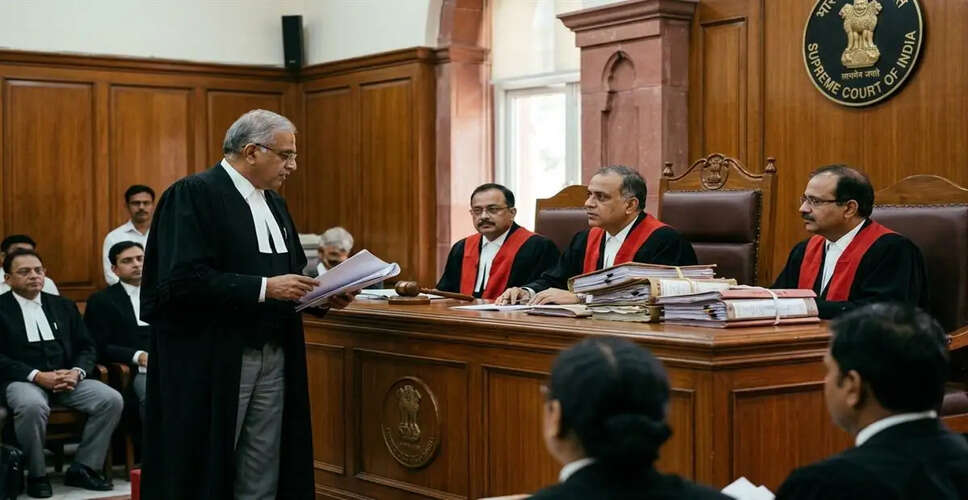

Supreme Court's Inquiry into Uttarakhand Bar Council
New Delhi, August 4 - The Supreme Court has requested the central government and the Bar Council of India (BCI) to respond to a petition filed by ten elected members of the Uttarakhand Bar Council. This petition challenges a proposal and circular issued in July, arguing that the BCI altered the structure of elected state bar councils after the elections had taken place. The bench, comprising Chief Justice Suryakant, Justice Joymalya Bagchi, and Justice V. Mohan, acknowledged the arguments presented by senior advocate Amit Anand Tiwari on behalf of the elected members and issued notices to the Ministry of Law and Justice and the BCI.
The petition, submitted by Kuldeep Kumar and nine other elected members through lawyer Dhruv Joshi, seeks the annulment of the BCI's proposal dated July 19 and the subsequent circular released on July 21.
According to the petition, these measures exceed the jurisdiction outlined in Section 3(2)(b) of the Advocates Act, 1961, and violate Articles 14, 19, and 21 of the Constitution. It states that the elections for the Uttarakhand Bar Council were conducted under the supervision of a high-powered election committee established by the Supreme Court. The election results were declared on February 28 and officially notified in the Uttarakhand Gazette on March 13, granting the elected members their legal right to assume office.
The petition further argues that Section 3(2)(b) of the Advocates Act allows for a maximum of 25 elected members in a state bar council where the number of voting lawyers exceeds 10,000. It contends that the BCI's subsequent proposal, which facilitates increased representation for women by allowing a maximum of 32 members in such states, effectively alters the statutory structure without any amendments from Parliament or specific permission from the Supreme Court. The circular from the BCI, which directs the re-publication of the election results by modifying those already published in the Gazette, is likened to restarting a completed electoral process.