
Supreme Court Ruling: Public Servants Face Automatic Suspension After 48 Hours in Custody
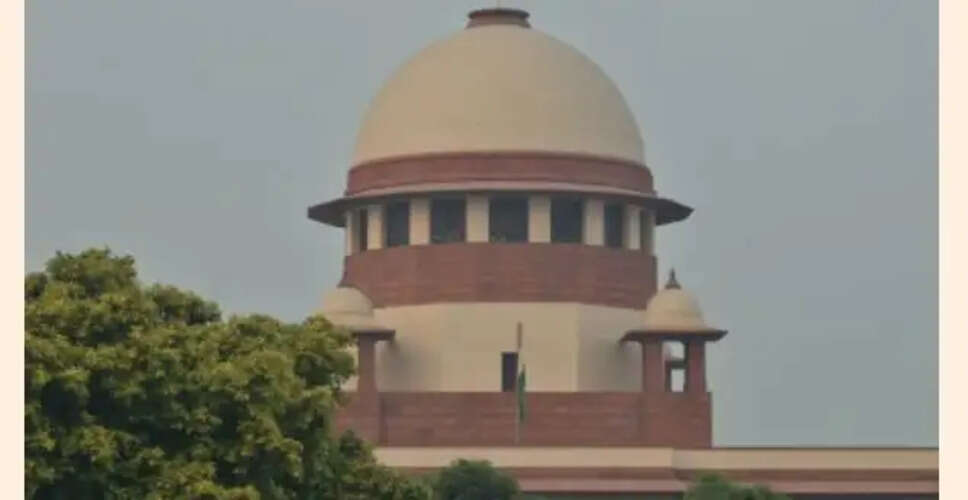

Key Supreme Court Decision on Public Servant Arrests
New Delhi: The Supreme Court has ruled that if a public servant is detained in judicial custody for over 48 hours, it results in an automatic suspension.
This ruling was made by a bench consisting of Justices J B Pardiwala and Manmohan while reinstating the bail of Vishwajeet Singh, who serves as the administrator of Sadar Hospital in Samastipur, Bihar.
Singh faced allegations of soliciting a bribe of Rs 4,000 to facilitate the payment of a contractual worker's pending wages totaling Rs 36,421.
The apex court overturned a decision by the Patna High Court that had revoked his bail nearly a year after it was initially granted.
The bench noted that while the amount of the bribe should not influence bail decisions, the High Court could have made its observations without revoking the bail.
In restoring the bail, the court highlighted a concerning issue regarding Singh's employment status and subsequent reassignment.
Justice Pardiwala remarked, "It is troubling that the accused was in judicial custody for nearly 15 days. Once a public servant is arrested and held for more than 48 hours, it leads to a deemed suspension. No formal order is necessary for this to take effect."
The bench acknowledged that Singh had been suspended but that this order was later rescinded.
Furthermore, it was noted with concern that he was reassigned to the same position at the same hospital. The court urged the state to address this situation promptly and in accordance with the law.
Singh had contested a July 1, 2026, ruling from the Patna High Court, which had allowed a request from the complainant to revoke his bail and order his arrest.
An FIR was filed against Singh in 2025 under Section 7(b) of the Prevention of Corruption Act, 1988, while he was serving as the administrator at the government-run Sadar Hospital.
He allegedly demanded Rs 4,000 in illegal payments to clear the complainant's outstanding wages of Rs 36,421.
After his arrest, Singh was granted bail by the sessions court, but this decision was later challenged by the complainant in the High Court, which subsequently canceled the bail.
The Supreme Court noted that the High Court's intervention came almost a year after the initial bail was granted, and it suggested that the High Court's decision was influenced by the sessions court's characterization of the bribe as minor.
The bench concluded that typically, in such cases, considering the potential maximum penalty, bail should be granted unless there are significant criminal records or particularly serious circumstances.