
Supreme Court Ruling on Scheduled Caste Status and Religious Conversion
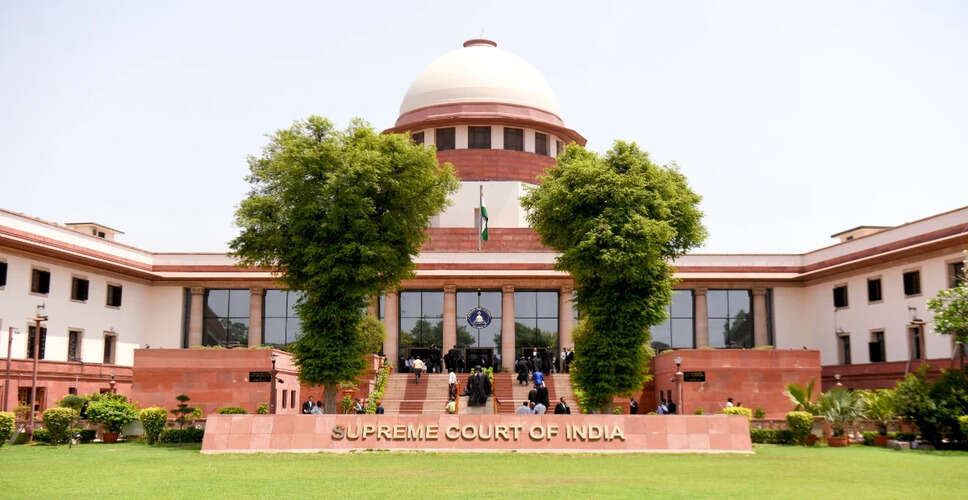
Supreme Court's Landmark Decision
The Supreme Court has ruled that individuals converting to religions other than Hinduism, Sikhism, or Buddhism are ineligible for Scheduled Caste (SC) status and cannot claim protection under the Scheduled Castes and Scheduled Tribes (Prevention of Atrocities) Act. The court clarified that only those adhering to Hinduism, Sikhism, or Buddhism are entitled to SC status. A bench comprising Justices P.K. Mishra and N.V. Anjaria upheld a decision by the Andhra Pradesh High Court, which stated that a person who adopts Christianity and actively practices it cannot be considered a member of the Scheduled Caste community. This ruling came in response to an appeal filed by Pastor Chinthada Anand, who challenged the May 2025 decision of the Andhra Pradesh High Court, alleging he faced caste-based discrimination and harassment from certain individuals.
Details of the Case
In its judgment, the Supreme Court stated that anyone practicing a religion other than Hinduism, Sikhism, or Buddhism cannot be classified as a member of the Scheduled Caste. Conversion to another religion results in the loss of SC status. Pastor Anand, who leads Sunday prayers in his village, claimed that Akkala Ramireddy and others repeatedly attacked him, threatened his family with death, and insulted him based on his caste. Anand filed a case against them under the Scheduled Castes/Scheduled Tribes Act. The accused argued that since Anand had converted to Christianity and was actively serving as a pastor, he was not entitled to the special protections afforded to Scheduled Castes.
High Court's Stance
After the investigation concluded and charges were filed against him, Anand approached the Andhra Pradesh High Court to dismiss the allegations. According to Live Law, Justice N. Harinath quashed the FIR, stating that the complainant lost his Scheduled Caste status after converting to Christianity and therefore could not claim protection under the Scheduled Castes/Scheduled Tribes Act. The High Court further noted that having a Scheduled Caste certificate would not assist Anand, as conversion invalidates SC status where caste discrimination is not recognized.
Final Ruling
Following this, Anand appealed to the Supreme Court, which upheld the decision of the Andhra Pradesh High Court. The bench remarked that the petitioner did not claim to have converted back to his original religion or been readmitted into the Madiga community. This indicates that the appellant has continued to practice Christianity and has served as a pastor for over a decade, regularly conducting Sunday prayers in homes across the village.