
Supreme Court Ruling: Conversion to Christianity Means Loss of Scheduled Caste Status
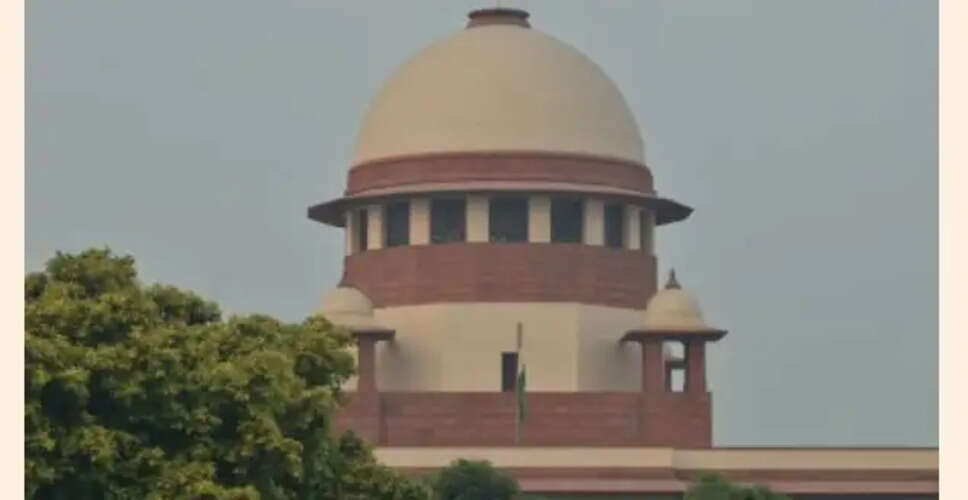
Supreme Court Upholds High Court Decision
New Delhi: On Tuesday, the Supreme Court confirmed a ruling from the Andhra Pradesh High Court, stating that individuals who convert to Christianity and actively practice the faith cannot retain their Scheduled Caste status.
A panel consisting of Justices Prashant Kumar Mishra and N.V. Anjaria emphasized that individuals adhering to religions outside of Hinduism, Sikhism, or Buddhism cannot be classified as Scheduled Castes. They noted that converting to another faith leads to an "immediate and complete loss" of this classification.
Reiterating the High Court's stance, the Supreme Court declared that the restrictions outlined in the Constitution (Scheduled Castes) Order of 1950 are "absolute" and allow for no exceptions.
Justice Mishra's panel remarked that one cannot profess a different religion while simultaneously claiming Scheduled Caste status. The court highlighted that the appellant had been a practicing pastor for over ten years, conducting regular Sunday services, which left no ambiguity regarding his religious affiliation.
"In this instance, the petitioner has not claimed to have reverted to his original religion or been reintegrated into the Madiga community. Instead, evidence shows that he has consistently identified as a Christian," the court noted.
Previously, the Andhra Pradesh High Court ruled on April 30, 2025, that a person who converted to Christianity and served as a pastor could not seek protections under the Scheduled Castes and Scheduled Tribes (Prevention of Atrocities) Act.
The High Court pointed out that the complainant had been a pastor for a decade, regularly leading Sunday prayers, which clearly indicated his Christian faith.
It further stated that once an individual converts to Christianity, they can no longer be considered part of the Scheduled Caste community and thus cannot invoke the protections of the SC/ST Act, as the caste system does not apply to Christianity.
The Andhra Pradesh High Court also clarified that the Constitution (Scheduled Castes) Order of 1950 explicitly states that individuals practicing religions other than those specified cannot be recognized as members of the Scheduled Castes.