
Supreme Court Ruling Clarifies Definition of Obscenity in Indian Penal Code
In a pivotal ruling, the Supreme Court of India clarified that the use of certain profane terms during heated discussions does not amount to obscenity under the Indian Penal Code. The court emphasized that for a term to be considered obscene, it must contain sexual or erotic elements. This decision overturned previous convictions related to the use of the word 'shameless' in a family property dispute. The ruling highlights the need for a clear understanding of what constitutes obscenity in legal terms, distinguishing between offensive language and material that provokes sexual interest. This landmark judgment is expected to have significant implications for future cases involving similar issues.
| Apr 8, 2026, 15:43 IST
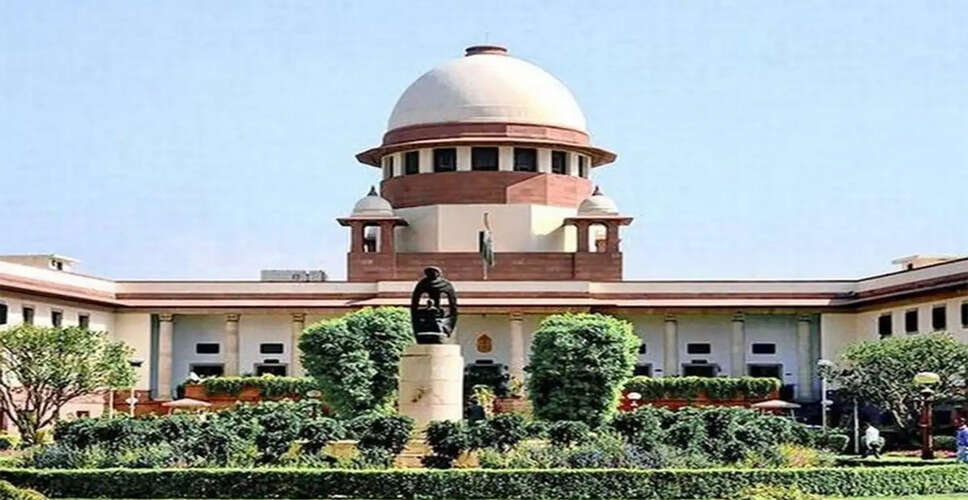
Supreme Court's Landmark Decision on Obscenity
In a significant ruling regarding criminal law, the Supreme Court stated on April 6 that the use of terms like "bastard" during heated discussions does not constitute obscenity under Section 294 of the Indian Penal Code (IPC), as reported by legal sources. The bench, comprising Justices PS Narasimha and Manoj Mishra, clarified that for an offense to be established under IPC Section 294, the words must contain sexual or erotic elements. The court emphasized that merely using profanity is insufficient. The bench expressed that in their view, the term 'shameless' alone does not sufficiently provoke sexual interest in an individual, especially considering such language is commonly used in modern heated conversations. Therefore, they concluded that the conviction of the appellants under IPC Section 294(2) is not sustainable and should be overturned.
Court Overturns Conviction of Defendants
The court annulled the sentences of two defendants who had been convicted under IPC Section 294(2) by the Madras High Court. This case stemmed from a family property dispute involving a shared boundary, which escalated into an argument after the deceased attempted to fence the land. During the altercation, the defendants reportedly used the term 'shameless,' leading to their conviction for obscenity. Before the Supreme Court, the defendants argued that no offense was committed under IPC Section 294. However, the state contended that the provision applies to the use of profanity. The judge dismissed the state's argument, stating that the word in question lacks any sexual or erotic connotation and therefore cannot be deemed obscene.
Clarification on the Definition of Obscenity
The court noted that the IPC does not provide a clear definition of obscene language. Referring to IPC Section 292, it clarified that obscenity includes material that can attract sexual interest. The judge reiterated that there is no explicit definition of obscene language in the IPC. However, citing Section 292, it was interpreted as material that can arouse sexual interest in a person. Referencing a previous ruling in the case of Aporva Arora vs. State, the court reiterated that obscenity relates to content that stimulates sexual or erotic thoughts, rather than merely shocking or offensive language. The court emphasized that the use of vulgar language and profanity does not inherently constitute obscenity. While such language may be perceived as distasteful, rude, or inappropriate, it is not sufficient on its own to be classified as 'obscene.'