
Supreme Court Rules on Legislative Authority and Contempt of Court
The Supreme Court has ruled that laws enacted by Parliament or state legislatures cannot be classified as contempt of court. This decision arose from a contempt petition involving the Chhattisgarh government's actions regarding the Salwa Judum and special police officers. The court emphasized that legislative actions following its orders do not constitute contempt, clarifying the boundaries of legislative authority. The ruling addresses significant concerns regarding the treatment of tribal individuals and the responsibilities of the state government in compliance with judicial directives. This case highlights the ongoing complexities in the relationship between state legislation and judicial oversight.
| Jun 3, 2025, 18:12 IST
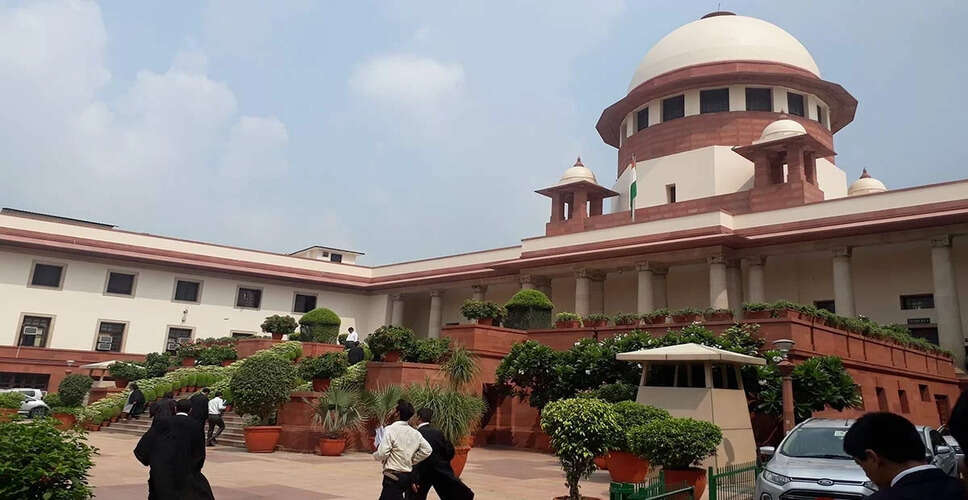
Supreme Court's Clarification on Legislative Actions
The Supreme Court has clarified that any law enacted by Parliament or state legislatures cannot be deemed as contempt of court. This statement was made by a bench comprising Justice B.V. Nagarathna and Justice Satish Chandra Sharma while addressing a contempt petition filed in 2012 by sociologist and former Delhi University professor Nandini Sundar and others. The petition accused the Chhattisgarh government of failing to comply with directives from 2011 regarding the cessation of support for surveillance groups like Salwa Judum and the arming of tribal individuals under the guise of special police officers in the fight against Maoists.
Details of the Contempt Petition
The petition claimed that the Supreme Court's orders were disregarded when the Chhattisgarh government enacted the Chhattisgarh Auxiliary Armed Police Force Act, 2011. This law authorizes the formation of an auxiliary armed force to assist security personnel in combating Maoist/Naxal violence and legitimizes the existing special police officers (SPOs) as members of this force. In addition to accusing the state government of ignoring directives regarding Salwa Judum, the petitioners pointed out that instead of disbanding the SPOs, the government passed the 2011 Act, which regularized all SPOs from the date of the Supreme Court's order on July 5, 2011.
Allegations Against the State Government
The petitioners further alleged that the state government has not vacated all school buildings and ashrams occupied by security forces, nor have they provided compensation to the victims of Salwa Judum and the SPOs. The Supreme Court stated on May 15 that enacting any law by Chhattisgarh after the court's order cannot be considered an act of contempt.