
Supreme Court Revises Order on Controversial NCERT Textbook Chapter: What’s Next?
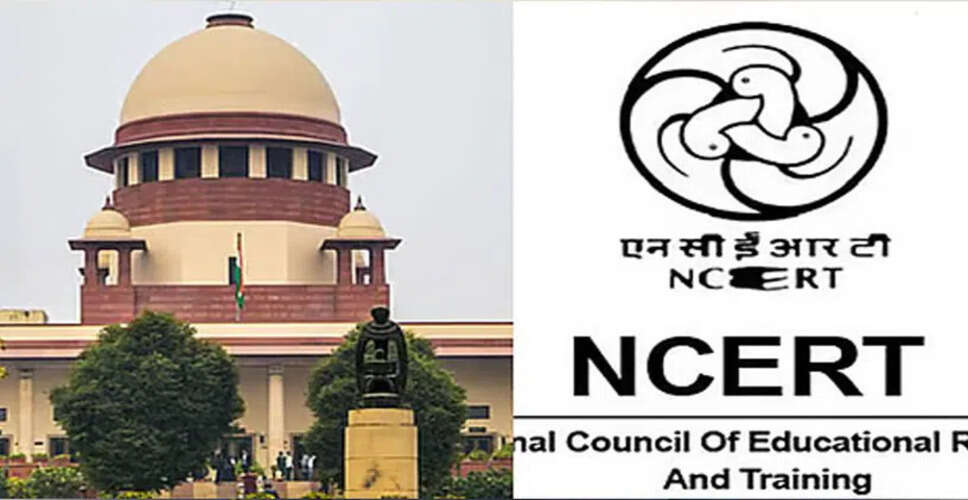

Supreme Court's New Ruling on NCERT Textbook Controversy
New Delhi: On Friday, the Supreme Court altered its previous ruling from March 11, which had mandated that the Centre, various states, and other entities distance themselves from three scholars due to a dispute over a chapter in an NCERT textbook that was deemed to contain 'offensive' material regarding judicial corruption.
The court has now allowed the Centre, states, Union territories, and public educational institutions that receive government funding to make their own decisions on the matter, free from the influence of the earlier ruling's remarks.
A bench comprising Chief Justice of India Surya Kant, along with Justices Joymalya Bagchi and Vipul M Pancholi, also retracted the portion of the March 11 ruling that accused the three scholars—Professor Michel Danino, Suparna Diwakar, and Alok Prasanna Kumar—of intentionally misrepresenting facts to cast the Indian judiciary in a negative light for eighth-grade students.
This decision came during the hearing of a petition filed by the three academics, who clarified that the content creation was a collaborative effort and not solely their responsibility.
The court noted that its previous comments were directed at the content itself rather than the individuals involved.
Initially, on March 11, the court had taken a strong stance against the three experts linked to the controversial chapter in the NCERT's Class 8 social science textbook, instructing the Centre and all states to sever ties with them.
Additionally, it ordered the formation of a committee of subject matter experts within a week to finalize the curriculum for NCERT's legal studies, applicable not only to Class 8 but also to higher grades.
The bench was addressing a suo-motu case titled 'In Re: Social Science textbook for Grade-8 (part-2) published by NCERT and ancillary issues.'
The court learned that the chapter was developed by a textbook team led by Danino, which included Diwakar and Kumar.
Earlier, on February 26, the Supreme Court had imposed a 'blanket ban' on any further publication, reprinting, or digital distribution of the NCERT's Class 8 social science textbook due to its 'offensive' content regarding judicial corruption, stating that the judiciary was 'bleeding' from the impact of such material.