
Supreme Court Reviews Waqf Amendment Act, 2025: Key Legal Arguments Presented
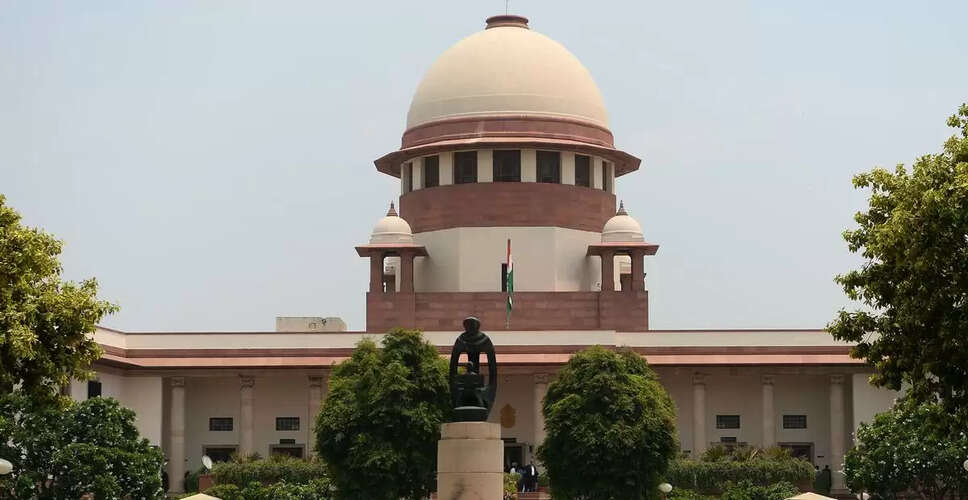
Supreme Court's Stance on Waqf Amendment Act
On Tuesday, the Supreme Court emphasized the necessity of presenting a compelling case to justify the suspension of a law while deliberating on several petitions that question the constitutional legitimacy of the Waqf Amendment Act, 2025.
Chief Justice BR Gavai remarked, "Every statute carries a presumption of constitutionality. To obtain interim relief, a robust and evident case must be established; otherwise, the presumption remains intact."
After over three hours of discussions, the bench, which included Justice Augustine George Masih, postponed the case until Wednesday to consider interim orders.
A waqf refers to an Islamic law endowment designated for religious, educational, or charitable purposes. Each state operates a waqf board, managed by a legal entity authorized to acquire, hold, and transfer properties.
The Waqf Amendment Bill of 2024 seeks to modify 44 sections of the 1995 Waqf Act, proposing changes such as permitting non-Muslims on waqf boards, imposing restrictions on property donations, and altering the operations of waqf tribunals. This bill was approved by Parliament on April 4, received presidential approval on April 5, and became effective on April 8.
Political entities, including the Congress and the All India Majlis-e-Ittehadul Muslimeen, have contested the bill's constitutionality in the Supreme Court.
During the hearing, Solicitor General Tushar Mehta, representing the Union government, requested that the court focus on three primary questions regarding interim relief.
In contrast, senior advocates Kapil Sibal and Abhishek Manu Singhvi, representing the petitioners, opposed this limitation and advocated for a comprehensive review of the amendments.