
Supreme Court Reviews Oil India's Proposal for Hydrocarbon Extraction Near Dibru-Saikhowa National Park

Supreme Court Seeks Government Responses
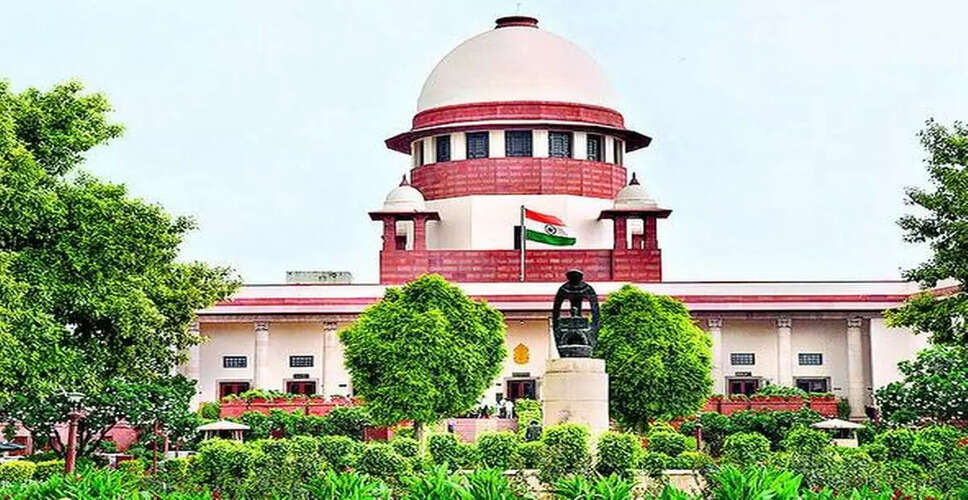
File image of the Supreme Court of India. (Photo: X)
New Delhi, Nov 4: The Supreme Court has requested feedback from the Ministry of Petroleum and Natural Gas and the Assam state government regarding Oil India's appeal to reverse the denial of its Extended Reach Drilling (ERD) proposal for hydrocarbon extraction beneath the Dibru-Saikhowa National Park.
A bench led by Chief Justice Surya Kant, along with Justices Joymalya Bagchi and V Mohana, acknowledged the urgency of the matter as presented by senior advocate Rakesh Dwivedi, representing Oil India, who stated that the public sector unit is currently unable to proceed with oil exploration in the designated area.
According to Dwivedi, the region surrounding Dibru-Saikhowa National Park is believed to contain approximately three percent of India's total hydrocarbon reserves.
He emphasized that the exploration would utilize Extended Reach Drilling techniques, which involve drilling below 4,000 meters without harming the park's flora and fauna.
The bench indicated that it might allow the exploration based on a report from relevant authorities, including the Ministry of Environment, Forest and Climate Change.
The case is scheduled for further discussion after November 17.
Previously, on September 2, the bench had allowed Oil India to withdraw a previous application and submit a new request to challenge the rejection of its ERD proposal by the central government.
Dwivedi argued that the situation is critical since the area is adjacent to a national park, and while all necessary permissions have been obtained, the government feels constrained by a 2023 court ruling that prohibits mining activities. He clarified that this is not classified as mining.
He explained that the pipeline would be installed outside the park, extending 4,000 meters underground before proceeding horizontally.
The application was submitted in relation to a long-standing case, TN Godavarman Thirumulpad vs Union of India, which has significantly influenced environmental law and forest conservation efforts.
Dwivedi underscored the urgency of the project, asserting its importance for the nation's energy needs.
The Chief Justice noted that if a new cause for action arises, the applicant could file a new petition.
He stated, “We aimed to conclude this matter. If there is a new cause, please file a fresh petition, and we will consider it. The registry cannot process the previous application due to an existing order.”
Dwivedi requested permission to withdraw the earlier application while retaining the right to file a new petition, suggesting that the matter could be addressed at the start or end of the day's proceedings.
The bench granted permission for the withdrawal of the interlocutory application, allowing the filing of a new petition.
In its plea, Oil India has contested the decision made by the Forest Advisory Committee and the subsequent actions of the Ministry of Environment, Forest and Climate Change (MoEFCC), which denied approval for the diversion of 0.069 hectares of forest land for the project in Tinsukia district.
The company argued that the authorities misinterpreted the Supreme Court's April 26, 2023 ruling that prohibits mining within national parks and wildlife sanctuaries and within one kilometer of their boundaries.
According to Oil India, hydrocarbon exploration and production via Extended Reach Drilling should not be equated with traditional mining practices.
The company asserted that oil and gas operations are governed by distinct legal and regulatory frameworks, and that ERD involves drilling from locations outside protected areas to access hydrocarbon reservoirs located several kilometers below the surface.
Oil India indicated that the proposed drilling would target hydrocarbon deposits at depths ranging from 3,500 to 4,000 meters beneath the Dibru-Saikhowa National Park, while the drilling infrastructure would remain outside the park's boundaries.
The company also referenced previous Supreme Court orders from 2017, which permitted hydrocarbon extraction beneath the national park using ERD technology, subject to specific conditions and safeguards.
It noted that the Standing Committee of the National Board for Wildlife had endorsed the proposal, and the Supreme Court had subsequently allowed subsurface hydrocarbon extraction, contingent upon adherence to environmental and wildlife protection measures.
The plea also mentioned the Eco-Sensitive Zone notification for Dibru-Saikhowa National Park issued in January 2020, which delineates an eco-sensitive zone extending from zero to 8.7 kilometers around parts of the park's boundary.
Oil India stated that it had received environmental clearance in May 2020 for extended drilling and testing of hydrocarbons at seven locations beneath the national park, although drilling in forested areas necessitates separate prior approval.
It requested the annulment of the MoEFCC's order dated August 2, 2024, and the minutes from the Forest Advisory Committee meeting held on July 4, 2024.
“We urge the respondent No.1 to grant approval under section 2(1)(ii) of the Van (Sanrakshan Evam Samvardhan) Adhiniyam, 1980 for non-forestry use of 0.069 hectares of forest land for Extended Reach Drilling under Dibru Saikhowa National Park from Baghjan PML in Tinsukia Wildlife Division, Tinsukia in Assam,” the plea stated.