
Supreme Court Reserves Decision on Pawan Khera's Bail Plea Amid Controversy
The Supreme Court has reserved its decision regarding Congress leader Pawan Khera's anticipatory bail plea in a case filed by Assam police. The case stems from allegations involving multiple foreign passports linked to the Chief Minister's wife. Senior advocate Abhishek Manu Singhvi argued against the necessity of custodial interrogation, emphasizing that the case primarily concerns defamation. The Assam government opposed the plea, claiming the documents presented by Khera were forged. This high-profile case raises significant questions about political influence and legal proceedings in India.
| Apr 30, 2026, 15:31 IST
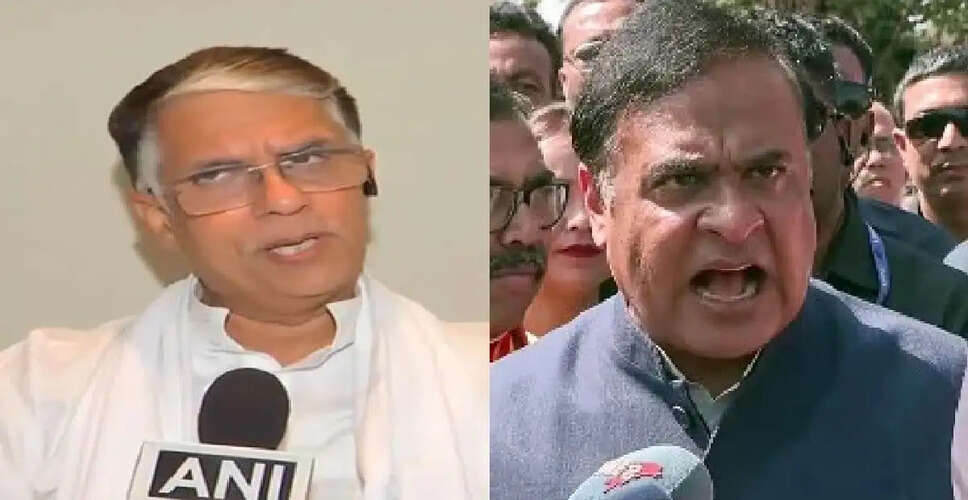

Supreme Court Hears Pawan Khera's Bail Application
The Supreme Court has decided to reserve its judgment on the bail plea filed by Congress leader Pawan Khera, who is seeking anticipatory bail in a case registered by the Assam police. This case arose from a complaint made by Rinki Bhuyan Sarma, the wife of Chief Minister Himanta Biswa Sarma. The bench, consisting of Justice J.K. Maheshwari and Justice Atul Chandurkar, conducted the hearing after the Guwahati High Court rejected Khera's request for anticipatory bail. The allegations against Khera involve claims that Rinki Bhuyan Sarma possesses multiple foreign passports and has financial interests abroad.
Arguments Presented in Court
Senior advocate Abhishek Manu Singhvi, representing Khera, argued that there was no need for custodial interrogation and questioned the necessity of arrest. He stated, "Why is it essential to humiliate someone through custodial interrogation?" Singhvi emphasized that the case primarily revolves around defamation and damage to reputation.
Concerns Over Public Statements
Singhvi described the situation as unprecedented, noting that public statements made by Assam Chief Minister Himanta Biswa Sarma have heightened fears of arrest. He informed the court that some remarks were not even worthy of publication and claimed that Sarma threatened Khera with a lifetime in an Assam jail. Singhvi referred to such comments as those of a "constitutional cowboy" and a "constitutional Rambo," suggesting that even Dr. B.R. Ambedkar would be astonished by such behavior from someone in a constitutional position.
Khera's Cooperation and Allegations
The senior lawyer argued that Khera is a public figure with no risk of fleeing and is willing to cooperate with the investigation. He pointed out that most of the allegations in the FIR are bailable offenses, thus making arrest unnecessary. Singhvi also highlighted that Assam police arrived at Khera's residence in Nizamuddin with 50-70 personnel, as if he were a terrorist.
Legal Objections Raised
Singhvi objected to the Guwahati High Court's reference to Section 339 of the Indian Penal Code, stating that it was neither mentioned in the complaint nor in the FIR. He criticized the High Court for labeling the complainant as an "innocent woman," arguing that such statements could prejudice the case before it is decided during the trial.
Opposition from Assam Government
In opposition to the plea, Solicitor General Tushar Mehta, representing the Assam government, informed the court that the documents presented by Khera were "fake and forged," asserting that no authority had issued such passports. He argued that custodial interrogation is necessary to determine who created these documents, who assisted Khera, and whether any foreign elements were involved.