
Supreme Court Rejects Delimitation Petition for Andhra Pradesh and Telangana
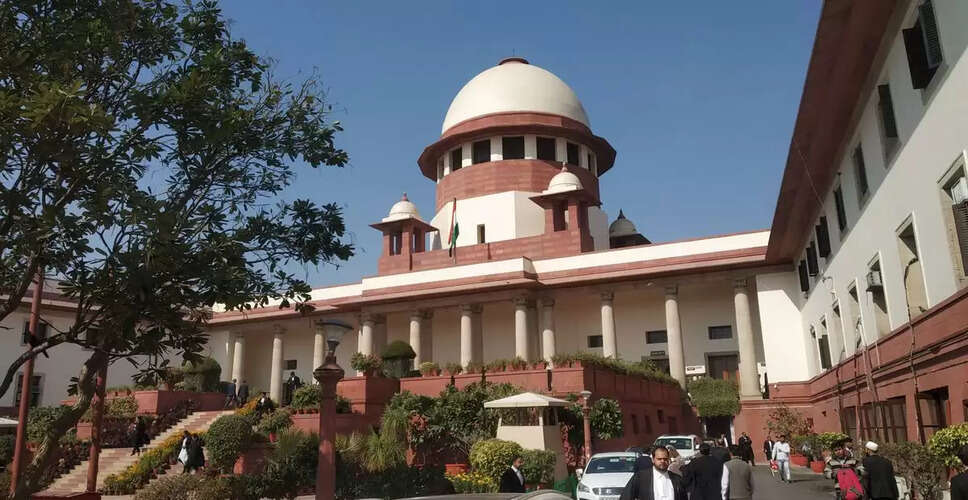
Supreme Court's Decision on Delimitation
On Friday, the Supreme Court dismissed a petition that requested the Union government to initiate the delimitation process in the states of Andhra Pradesh and Telangana.
Delimitation refers to the process of redrawing the boundaries of electoral constituencies.
A bench comprising Justices Surya Kant and N Kotiswar Singh found the petitioner's claim—that the delimitation exercise was conducted only in Jammu and Kashmir last year, while excluding southern states—was not valid and did not violate constitutional provisions.
The Union government began the delimitation of Assembly constituencies in Jammu and Kashmir in February 2020. By May 2022, the number of elected Assembly seats in the Union Territory increased from 83 to 90, following the final delimitation order. This included one new seat for Kashmir, raising its total to 46, and six additional seats for Jammu, which now has 43.
K Purushottam Reddy, a professor, had filed the petition, arguing that the exclusion of Andhra Pradesh and Telangana from this process constituted unreasonable classification and was thus unconstitutional.
Following the bifurcation of Andhra Pradesh in 2014, the undivided state's Assembly had 294 seats. After the split, Andhra Pradesh was assigned 175 seats, while Telangana received 119.
On Thursday, the Supreme Court noted that permitting delimitation in Andhra Pradesh and Telangana could lead to a surge of similar requests from other states seeking equal treatment.
The bench clarified that the rules governing delimitation for states differ from those applicable to Union Territories, which are governed by parliamentary legislation.