
Supreme Court Raises Concerns Over WhatsApp and Meta's Data Sharing Practices
The Supreme Court has voiced serious concerns regarding the data sharing practices of WhatsApp and Meta during a recent hearing. The court highlighted the need for clear opt-out options for users and criticized the effectiveness of current privacy policies, especially for individuals in remote areas. Chief Justice emphasized the importance of protecting citizens' privacy rights and stated that any infringement would not be tolerated. The case has been adjourned to February 9 for further proceedings, with the Union of India being added as a respondent. This ruling could have significant implications for data privacy regulations in India.
| Feb 3, 2026, 15:26 IST
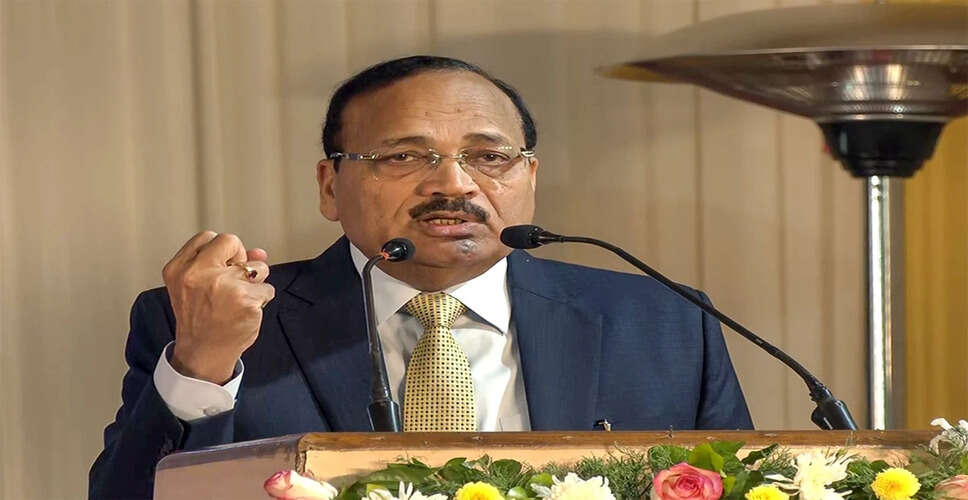
Supreme Court's Warning on Data Sharing
The Supreme Court has expressed significant concerns regarding the data sharing practices of WhatsApp and Meta. This discussion arose during the hearing of a series of appeals against an order from the Competition Commission of India (CCI), which addressed WhatsApp's 2021 ultimatum. On November 4, 2025, the National Company Law Appellate Tribunal (NCLAT) upheld the CCI's fine but overturned a five-year ban imposed by the regulator, allowing partial data sharing for advertising purposes. Subsequently, on December 15, 2025, a clarification was issued mandating that while advertising-related data sharing could continue, all forms of data sharing—whether related to advertising or not—must provide users with a clear opt-out option.
Concerns Over User Understanding
The bench also raised concerns about the effectiveness of opt-out mechanisms, noting that individuals living in remote areas of Tamil Nadu or Bihar, such as street vendors, may not comprehend the "clever language" used in privacy policies. The court remarked that consumers are being commercially exploited and described the silent consumers as victims of a voiceless system. It emphasized that users have become accustomed to such platforms, and the real issue is not whether they were warned but rather that they were coerced into accepting terms or abandoning the service. Stressing that the right to privacy cannot be compromised, the bench asserted that it would not allow any infringement on the rights of citizens.
Chief Justice's Strong Remarks
The Chief Justice stated, "This is a despicable way to infringe upon the country's privacy. The right to privacy in this nation is protected so rigorously that we will not permit its violation." The court has postponed the hearing of the case to February 9, aiming to issue interim directions. At the joint request of senior advocates, the Union of India has been made a respondent and may also file its counter.