
Supreme Court Questions Young Indian Lawyers Association on Women's Entry at Sabarimala Temple
The Supreme Court has raised significant questions regarding the Young Indian Lawyers Association's petition challenging the ban on women's entry at the Sabarimala Temple. During the proceedings, the court scrutinized the organization's jurisdiction and the basis for their public interest litigation. Chief Justice D.Y. Chandrachud and Justice B.V. Nagarathna expressed skepticism about the petitioners' claims, questioning the legitimacy of an organization filing on behalf of individual devotees. The court's inquiry delves into the intersection of faith, individual rights, and judicial authority, making this case a pivotal moment in the ongoing discourse surrounding religious practices in India.
| May 5, 2026, 16:25 IST
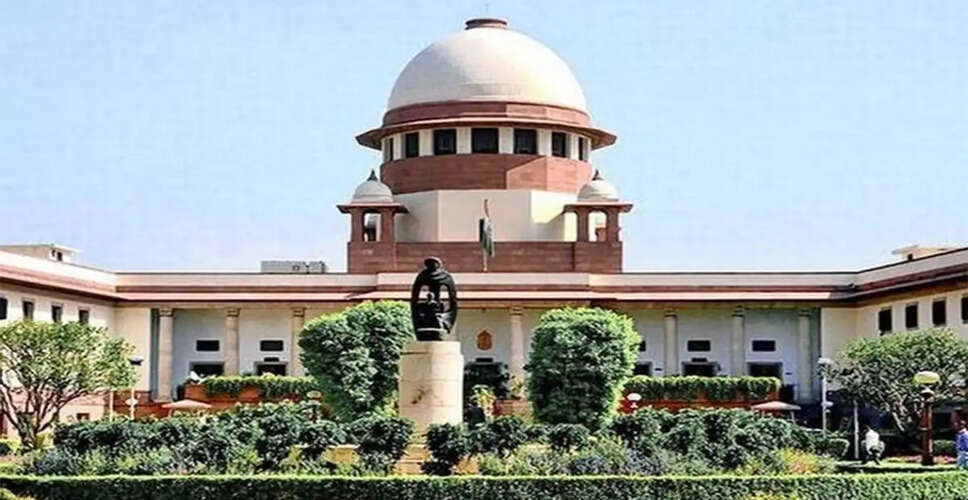

Supreme Court Inquiry into Women's Entry Restrictions
The Supreme Court engaged in questioning representatives from the Young Indian Lawyers Association (YILA) on Wednesday. The court raised concerns regarding the jurisdiction of the original petitioners who filed a public interest litigation against the ban on the entry of women aged 10 to 50 years, established in 2006. A nine-judge bench, led by Chief Justice of India (CJI) D.Y. Chandrachud, inquired about the basis for filing the public interest litigation to review the Kerala High Court's decision that upheld the entry restrictions at the Sabarimala temple dedicated to Lord Ayyappa. The court also sought clarification on whether the organization had formally authorized the filing of the petition. Questions were posed regarding the identity of the organization's president and whether any resolution had been passed to authorize this petition.
The petition sought to allow women aged 10 to 50 years to enter the Sabarimala temple, while simultaneously asserting that it did not challenge the religious beliefs underlying the ban. Highlighting this contradiction, Chief Justice Chandrachud questioned how the petitioners reconcile their request for entry with their claim of not challenging faith, as stated in prayer (k) and paragraph 3 on page 10. The court further probed whether any judicial body could claim to intervene in matters of faith. Justice B.V. Nagarathna raised the issue of how an organization could file a petition without the rights of the devotees, emphasizing that devotion is inherently individual.
Justice Nagarathna pointedly asked, "What is your stake in this matter? What is your role here?" Meanwhile, the Chief Justice made a sharp remark questioning if the organization was acting as the Chief Minister of the country. A senior lawyer representing YILA attempted to justify the petition by referencing previous judicial decisions, arguing that prohibiting women's entry is akin to an assault on their femininity.