
Supreme Court Questions Stubble Burning as Sole Cause of Delhi's Air Pollution
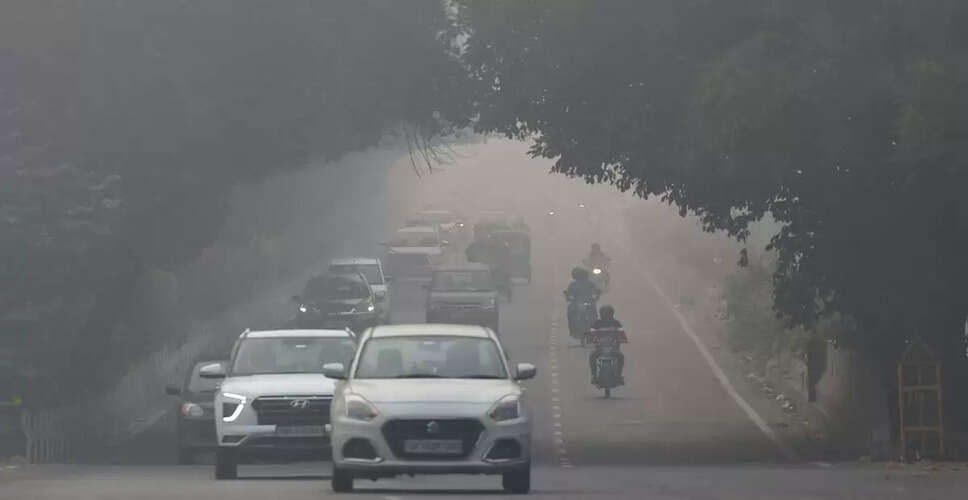
Supreme Court's Inquiry into Air Quality
On Monday, the Supreme Court raised concerns about whether stubble burning is the only factor contributing to the severe air pollution in Delhi and the surrounding National Capital Region. The court requested a more comprehensive evaluation of other pollutants, as reported by a legal news outlet.
A panel consisting of Chief Justice Surya Kant and Justice Joymalya Bagchi pointed out that it is convenient to blame farmers, who were not present in court, and noted that stubble burning continued during the COVID-19 lockdown without causing such a severe pollution crisis.
“During the pandemic, stubble burning occurred as usual, yet we could still see clear skies and stars,” the court observed. “This raises questions about other contributing factors.”
The court instructed the Commission for Air Quality Management to provide a report within a week detailing actions taken to mitigate other pollution sources, such as vehicle emissions and construction dust, according to another media source.
“It is easy to attribute the problem solely to farmers and stubble burning, but we must also consider vehicular emissions and dust from construction,” Kant was quoted as saying. “This issue should not become a matter of political debate or pride. Farmers need to be informed and supported.”
Additionally, the court requested the air quality monitoring body to clarify which of its previous directives had been effective and why past action plans had not led to significant improvements, as reported by the legal news outlet.
The court emphasized its commitment to regularly monitor the situation as part of its efforts to tackle the pollution crisis. “None of us can afford to assume that this problem will resolve itself,” the court stated. “This issue cannot simply be ignored.”
On November 12, the court had requested reports from Punjab and Haryana regarding measures implemented to reduce stubble burning by farmers.
The next hearing is set for December 10.
Air quality in Delhi typically worsens during the winter months, often ranking as the most polluted capital globally.
Factors such as stubble burning in Punjab and Haryana, vehicle emissions, firecracker use during Diwali, lower temperatures, reduced wind speeds, and emissions from industries and coal plants all contribute to the air quality crisis.
Since mid-October, Delhi has consistently recorded air quality in the “poor” category or worse, leading to the implementation of Stage 3 restrictions under the Graded Response Action Plan on November 11.
The Graded Response Action Plan consists of a series of incremental anti-pollution measures activated to prevent further deterioration of air quality once it reaches a specific threshold in the Delhi-NCR region.
On November 26, the Commission for Air Quality Management lifted the Stage 3 restrictions, citing improvements in air quality, although restrictions under GRAP 1 and GRAP 2 remain in effect.
As of 9:06 AM on Tuesday, Delhi's average Air Quality Index was recorded at 340, categorizing it as “very poor,” according to the Sameer application, which provides hourly updates from the Central Pollution Control Board.
The Air Quality Index ranges from 0 to 50 for “good” air quality, 51 to 100 for “satisfactory,” and 101 to 200 for “moderate.” As the index value rises, air quality worsens, with values of 201 to 300 indicating “poor” air quality, and 301 to 400 classified as “very poor.”
Values between 401 and 450 signify “severe” air pollution, while anything above 450 is categorized as “severe plus.”