
Supreme Court Questions Relevance of Laws Disqualifying Candidates with More Than Two Children
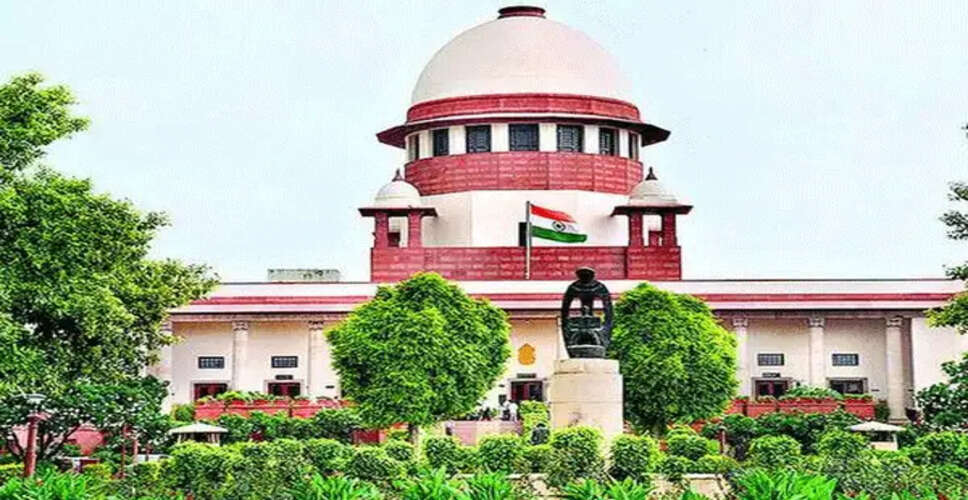

Supreme Court's Insight on Child Limit Laws
In a significant ruling on Wednesday, the Supreme Court addressed the laws that disqualify individuals from contesting in local elections based on having more than two children. The court highlighted the declining fertility rate in India and noted that the demographic landscape has changed considerably over the last two decades. Given these shifts, the court suggested that the rationale behind such disqualification laws should be re-evaluated, indicating that they may no longer be relevant.
The remarks were made by a bench comprising Justices P.S. Narasimha and Alok Aradhe during the hearing of a case involving Mangala Bhimrao, a former sarpanch from Kakoda village in Maharashtra, who was deemed ineligible to run for election due to the birth of her third child. The Supreme Court overturned her disqualification and halted the ongoing proceedings against her under the relevant Maharashtra law.
The court pointed out that there has been a significant transformation in India's population dynamics over the past twenty years. Concerns that once revolved around rapid population growth and potential overpopulation are no longer reflected in current demographic data. The total fertility rate has consistently declined, dropping from nearly three children per woman to 1.9.
Considering these changing demographic conditions, the bench emphasized the need to reassess the utility of laws that prevent individuals with more than two children from contesting in local elections. When these laws were enacted, population control was a pressing policy challenge, but the circumstances have evolved.
The Supreme Court also indicated the necessity of revisiting its 2003 decision in the case of Javed vs. Haryana Government. This case, which upheld a provision of the Haryana Panchayati Raj Act, 1994, that disqualified individuals with more than two living children from running for local elections, has now been referred to a larger bench for further review.
At that time, the court deemed the provision constitutionally valid in the context of population control. However, the Supreme Court has now stated that a review is warranted in light of the changing social and demographic landscape. The larger bench will consider the previous ruling and its associated legal implications.
The court clarified that when the Javed case was decided, India's total fertility rate was approximately three children per woman, making population control a key policy priority for the government. This context justified the imposition of a two-child limit for contesting local elections.
However, significant changes in the country's demographic situation have occurred in recent years, with various indicators pointing to a continuous decline in fertility rates. The court has called for a review of outdated laws and judicial decisions to align with current realities.
The Supreme Court's observations and the decision to refer the matter to a larger bench may ignite new discussions regarding the legal provisions that disqualify candidates based on the number of children. Nevertheless, the final legal stance will only be clarified following the larger bench's review and ruling.