
Supreme Court Questions Legitimacy of PIL Against Sabarimala Temple Entry Ban
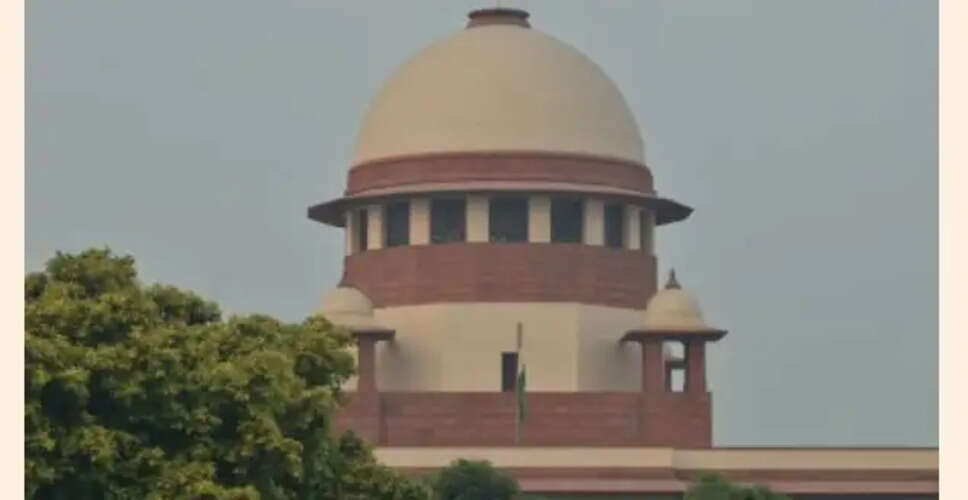

Supreme Court's Strong Remarks on Women's Entry Ban
New Delhi: During a recent session, the Supreme Court posed a provocative question to the Indian Young Lawyers Association regarding their 2006 Public Interest Litigation (PIL) that challenges the ban on women aged 10 to 50 from entering the Sabarimala Temple in Kerala. The court criticized the PIL as a misuse of legal processes, suggesting that the association should focus on supporting its younger members instead of pursuing such cases.
This commentary came from a nine-judge Constitution bench while deliberating on issues of gender discrimination in religious sites, including Sabarimala, and the extent of religious freedoms across various faiths.
The bench included Chief Justice of India (CJI) Surya Kant and Justices B V Nagarathna, M M Sundresh, Ahsanuddin Amanullah, Aravind Kumar, Augustine George Masih, Prasanna B Varale, R Mahadevan, and Joymalya Bagchi.
Advocate Ravi Prakash Gupta, representing the Indian Young Lawyers Association, argued that the PIL was inspired by four newspaper articles from June 2006 and insisted that the association was not disputing the faith of Lord Ayyappa's followers but rather supporting it.
As Gupta continued his argument, Justice Nagarathna questioned how an organization could possess beliefs, emphasizing that such convictions are inherently individual. Justice Kumar further inquired whether the organization had formally resolved to file the PIL and if it had been signed by its president.
CJI Kant challenged the rationale behind the PIL, asking, "Are you the chief priest of the country?" Gupta clarified that the organization is a registered entity.
The advocate referenced earlier statements indicating that the temple's tantri (priest) had asserted that young women should be barred from entering, as the deity disapproves of their presence. He also expressed discontent with comments made by three judges regarding the nine-judge bench.
Justice Nagarathna remarked that the Young Lawyers Association seemed to lack focus, stating they should prioritize the welfare of the bar and assist in improving the legal system, particularly for those struggling in rural areas.
The hearing is ongoing.
In September 2018, a five-judge Constitution bench had overturned the ban on women aged 10 to 50 entering the Sabarimala Ayyappa temple, declaring the longstanding Hindu practice unconstitutional.