
Supreme Court Questions Forensic Examination of Manipur Violence Audio Clips
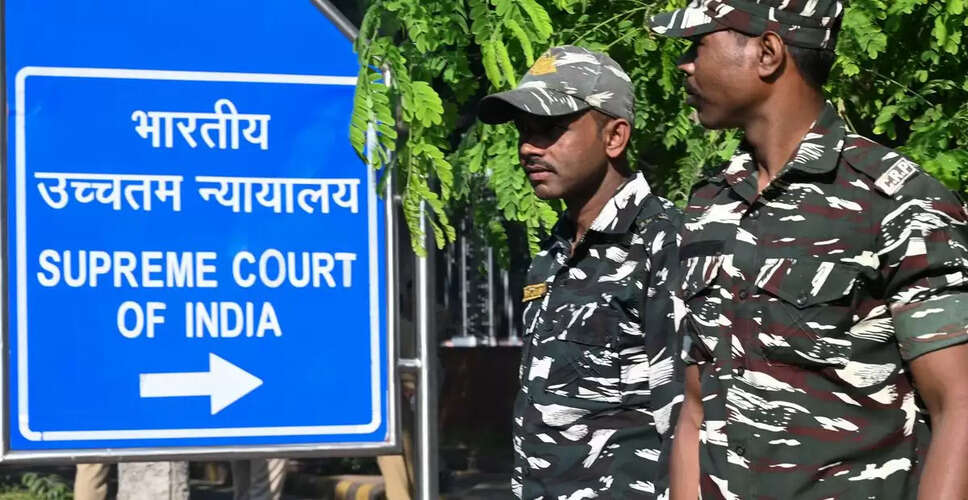
Supreme Court's Inquiry into Manipur Audio Evidence
On Monday, the Supreme Court raised concerns regarding the government's decision not to send the complete audio recording, which allegedly connects former Manipur Chief Minister N Biren Singh to the ethnic violence in the region, to the National Forensic Science University for analysis.
The court expressed being “a little disturbed” by an affidavit submitted by the Kuki Organization for Human Rights Trust, which indicated that only selected segments of the audio had been forwarded for forensic testing.
The recordings, believed to be from 2023, reportedly feature a voice resembling Singh's, claiming responsibility for the initiation of the conflict and asserting that he disregarded Union Home Minister Amit Shah’s directive against the use of explosives during the unrest, while also protecting individuals who had seized weapons from police armories.
Since the ethnic clashes erupted between the Meitei and Kuki-Zo-Hmar communities in May 2023, over 260 lives have been lost, and more than 59,000 individuals have been displaced. Violence has continued intermittently into 2024.
Following Singh's resignation, President’s Rule was imposed in February.
The Kuki group claimed in their November affidavit that the Manipur Police had only sent brief and edited clips to the forensic lab in Gujarat, rather than the full 48-minute recording.
This allegation was made in response to a report from the laboratory in October, which stated that the clips had been altered and were unsuitable for a scientific voice comparison.
The laboratory informed the court that it could not determine whether the voice in the recordings belonged to Singh.
The Supreme Court is currently reviewing a petition from the Kuki Organization for Human Rights Trust, which is calling for an independent investigation into the audio clips that allegedly feature Singh's voice.
On Monday, Additional Solicitor General Aishwarya Bhati requested additional time to address the affidavit.
The next hearing is scheduled for January 7.
In February, Advocate Prashant Bhushan, representing the petitioners, informed the court that the tapes had been analyzed by an independent forensic lab, Truth Labs, which had confirmed with 93% certainty that the voice in the recordings was indeed that of the chief minister.
In August, the Supreme Court ordered that the audio clips be sent for a new forensic examination to the National Forensic Science University in Gandhinagar to verify their authenticity.
The court emphasized that this fresh examination would clarify whether the audio clips had been altered and whether the voice in the disputed recordings matched an accepted audio sample, ensuring a definitive conclusion on whether the same individual is speaking throughout.
The laboratory was instructed to deliver its findings directly to the court in a sealed envelope.