
Supreme Court Questions Assam Government Over Eviction Drive
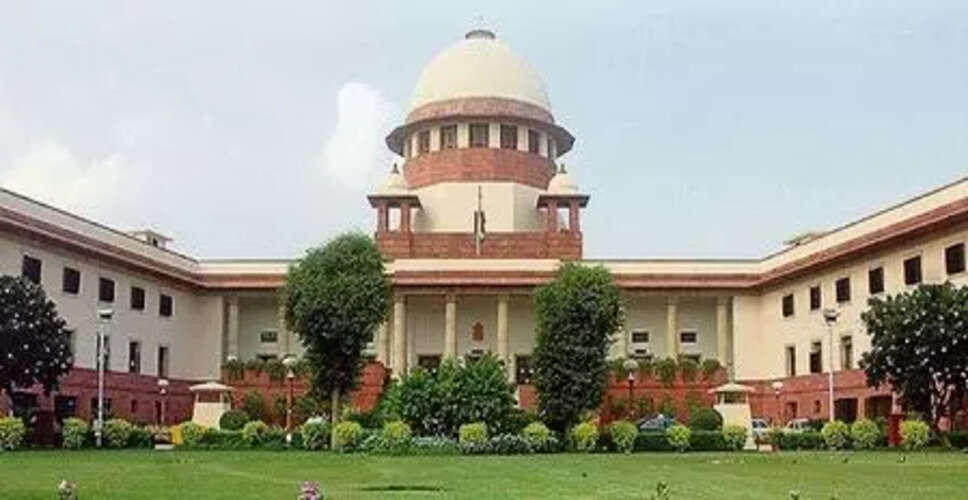
Supreme Court's Notice to Assam Authorities
New Delhi, July 25: The Supreme Court has issued a notice to the Assam government regarding a recent eviction operation conducted at Hasila Beel in the Goalpara district.
A bench led by Chief Justice BR Gavai and Justice K Vinod Chandran directed the Chief Secretary of Assam, the District Commissioner, the Superintendent of Police of Goalpara, and officials from the Revenue and Disaster Management Department to submit a comprehensive report on the matter within two weeks.
The court has requested clarification on how the eviction was executed in what appears to be a breach of its established guidelines and why proper legal procedures were not adhered to.
Families affected by the eviction, along with the Assam State Jamiat Ulama, have approached the Supreme Court, asserting that the eviction was conducted in defiance of previous court orders.
The petition references a ruling from November 13, 2024, which established nationwide guidelines prohibiting property demolitions without prior notice and a 15-day period for the affected parties to respond.
This case has been registered under PIL Diary No. 37759/2025.
The petitioners contend that the eviction was executed arbitrarily, disregarding due process and infringing upon the fundamental rights of the individuals involved.
Senior advocate Sanjay Hegde, representing the petitioners on behalf of the Assam State Jamiat Ulama, led by Maulana Badruddin Ajmal, presented the case in court.
The petition claims that the eviction and demolition efforts in June impacted over 667 families and were conducted without allowing personal hearings or sufficient time for appeals or judicial review.
“Moreover, the eviction and demolition actions primarily targeted a minority community, while similarly situated individuals from the majority community were left unaffected, indicating discriminatory enforcement by the authorities,” the petition stated.
Hegde pointed out that only a two-day notice was provided before the demolition took place.
“Why don’t you approach the high court?” the Chief Justice inquired.
Hegde responded that several individuals had indeed approached the high court, where the plea also addressed rehabilitation issues.
He emphasized that even those deemed encroachers are entitled to due legal process.
“These are 667 impoverished families who have resided on that land for 60 to 70 years,” Hegde remarked.