
Supreme Court Protects Himachal Apple Growers from Orchard Destruction
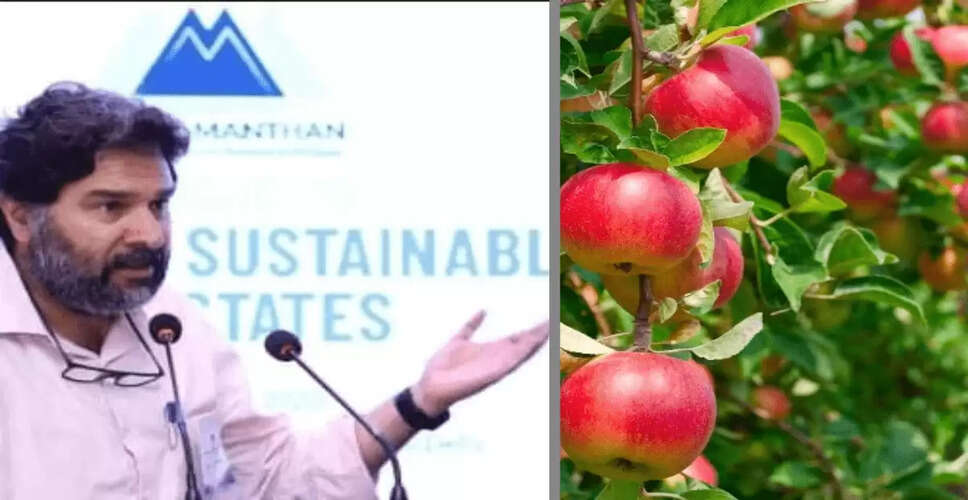
Legal Battle Brings Relief to Apple Farmers
Sunil Chadha
Shimla: A significant legal struggle initiated by a former municipal deputy head has culminated in a major victory for countless apple farmers in Himachal Pradesh. The Supreme Court has intervened to halt the destruction of fruit-laden trees that were cultivated on encroached forest land. This decision, influenced by petitions led by former Shimla Deputy Mayor and CPM leader Tikender Singh Panwar, has provided much-needed relief to growers facing the potential loss of their crops and livelihoods.
Overturning the Himachal Pradesh High Court’s order from July 2, the Supreme Court determined that the directive to remove fruit-bearing orchards could have severe social and economic repercussions, deeming it inappropriate from the outset.
Citizen Advocacy Reaches the Supreme Court
Panwar, alongside activist lawyer Rajiv Rai, approached the apex court after the high court mandated the forest department to uproot apple orchards on encroached land and replace them with forest species, with costs to be borne by the farmers. The petitioners contended that this ruling disproportionately affected marginalized and landless families who rely heavily on apple farming for their survival.
In response, a Bench led by Chief Justice of India Surya Kant and Justice Joymalya Bagchi remarked that the matter fell squarely within policy considerations. “The high court made an error in issuing such drastic directives,” the Bench stated, while suspending the order to cut down fruit-bearing trees.
Supreme Court Emphasizes Livelihoods at Stake
The Supreme Court highlighted that apple orchards should not be regarded merely as encroachments. It pointed out that extensive tree cutting, especially during the monsoon season, could lead to landslides and soil erosion in the ecologically sensitive hill region, in addition to jeopardizing the economic stability of thousands of rural families.
However, the court clarified that the state government was not prohibited from addressing encroachments on forest land, but any actions taken must consider welfare implications. It urged the Himachal government to develop a proposal for the Centre to assist landless and vulnerable groups affected by this situation.
Growers Praise Panwar's Efforts and Continue Advocacy
Apple growers and farmer unions celebrated the ruling, acknowledging Panwar's efforts in representing their concerns at the highest judicial level. Growers noted that reports had already indicated the removal of over 3,800 apple trees in areas like Chaithla, Kotgarh, and Rohru, with plans to eliminate tens of thousands more before the Supreme Court intervened.
Leaders from the Apple Growers Association stated that while the ruling has averted an immediate crisis, their protests will persist until effective rehabilitation measures, including land rights for impoverished and disaster-affected families, are established. Farmer representatives described the judgment as a triumph resulting from persistent public resistance, emphasizing that citizen-led initiatives can still influence significant social outcomes.