
Supreme Court Petition Challenges Bihar's Electoral Roll Revision
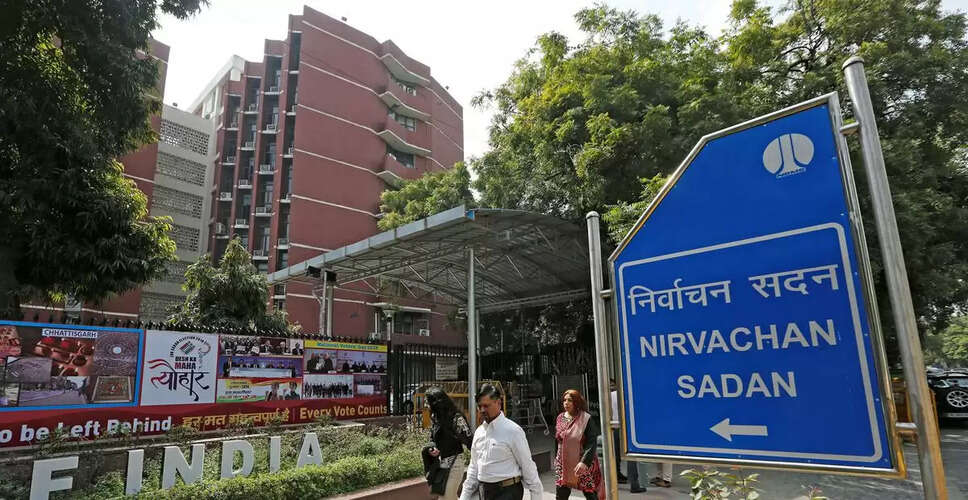
Legal Action Against Election Commission's Decision
The Association for Democratic Reforms has lodged a petition with the Supreme Court, contesting the Election Commission's recent directive for a special intensive revision of Bihar's electoral rolls. The organization argues that this decision is arbitrary and poses a risk of disenfranchising millions of voters.
In its petition, the non-profit seeks to annul the order, claiming it violates several constitutional articles, including Articles 14, 19, 21, 325, and 326, as well as the Representation of the People Act and Rule 21A of the Registration of Electors Rules.
Article 14 ensures equality before the law, while Article 19 protects freedom of speech and expression. Article 21 safeguards life and personal liberty, and Article 325 prohibits discrimination in electoral rolls based on religion, race, caste, or sex. Article 326 mandates elections based on adult suffrage, and Rule 21A addresses the inclusion of names that may have been inadvertently omitted.
The Election Commission announced the special intensive revision of Bihar's electoral rolls on June 24, in preparation for the upcoming Assembly elections anticipated in October or November.
As part of this initiative, individuals whose names were absent from the 2003 voter list must provide proof of their eligibility to vote. This requirement affects approximately 2.9 crore of the state's 7.8 crore voters, translating to around 37% of the electorate.
Voters born before July 1, 1987, are required to present proof of their date and place of birth, while those born between July 1, 1987, and December 2, 2004, must submit documentation verifying the birth details of one parent. For individuals born after December 2, 2004, proof of birth for themselves and both parents is necessary.
The Association for Democratic Reforms contends that this revision could arbitrarily disenfranchise a significant number of voters, thereby undermining the integrity of free and fair elections in the country.
The petition highlights that the new documentation requirements shift the burden of proof from the state to the citizens, which could disproportionately impact poorer and marginalized voters, particularly in rural areas of Bihar.
Concerns were raised regarding the exclusion of commonly held documents like Aadhaar and ration cards, which could hinder many eligible voters from participating in the electoral process.
The petition further argues that the directive's documentation requirements, lack of due process, and the unreasonably short timeline for the electoral roll revision could lead to the removal of names of many legitimate voters, resulting in their disenfranchisement.
Historically, birth registration rates in Bihar have been low, and many voters lack access to official documents. The petition estimates that over three crore voters in the state may struggle to meet the new criteria, risking their removal from the electoral rolls.
Additionally, the Association for Democratic Reforms pointed out that the Election Commission has not provided any rationale for the revision order, which raises questions about its legitimacy.
According to Section 21(3) of the Representation of the People Act, special revisions are permitted only for documented reasons, which the organization claims the Election Commission has failed to provide.
The petition also notes that a special summary revision was conducted in Bihar from October 2024 to January 2025, with no reports of significant irregularities. The timing of this new exercise before the Assembly elections has raised concerns about its purpose and execution.