
Supreme Court Overturns Bail in Dowry Death Case, Calls for Judicial Vigilance
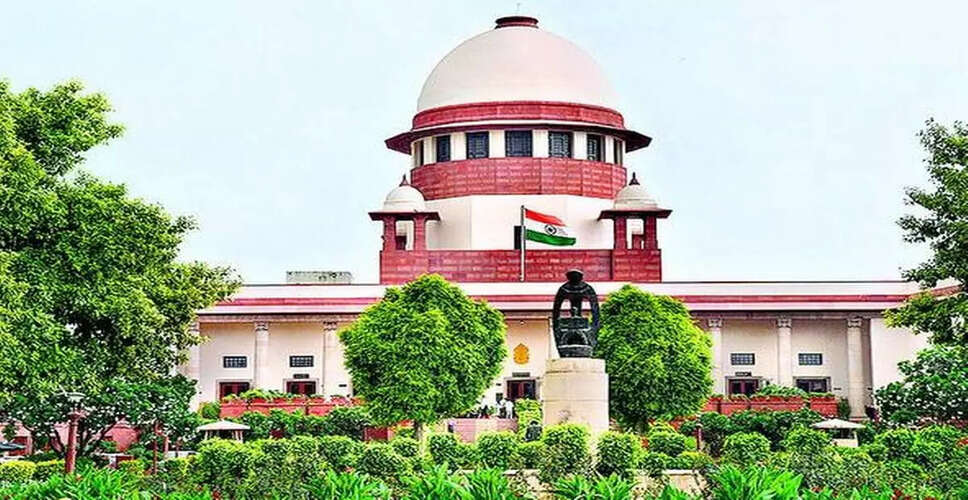
Supreme Court's Ruling on Dowry Death Case
New Delhi, March 27: The Supreme Court has annulled a bail decision made by the Patna High Court concerning an individual implicated in a dowry death case, labeling the decision as 'entirely unjustifiable' and criticizing the 'mechanical approach' taken in such serious matters.
A bench comprising Justices J.B. Pardiwala and Vijay Bishnoi upheld the appeal from the deceased's mother, mandating that the husband of the deceased report to jail authorities within a week. Should he fail to comply, the trial court is instructed to issue a non-bailable warrant.
This dowry death case originated from a First Information Report (FIR) filed on September 1, 2024, at the Gopalpur Police Station in Bihar, under relevant sections of the Bharatiya Nyaya Sanhita, 2023.
According to the prosecution, the deceased, married for approximately one-and-a-half years, was discovered dead in her marital home under dubious circumstances, exhibiting numerous external and internal injuries.
The FIR, submitted by the victim's mother, Lal Muni Devi, claimed that a significant dowry, including Rs 20 lakh in cash and jewelry valued at around Rs 6 lakh, had been provided at the time of marriage. Nonetheless, the accused and his family allegedly continued to demand additional items, including a motorcycle and a vehicle, subjecting the deceased to ongoing harassment. Furthermore, it was claimed that the accused had initiated a relationship with another woman within six months of the marriage, leading to further disputes and mistreatment of the deceased.
The post-mortem examination revealed severe injuries, including a fractured skull with lacerated brain matter, a ruptured sternum and heart, a pelvic fracture, and multiple abrasions. The cause of death was determined to be 'haemorrhage and shock due to head injury.'
In light of these findings, the Supreme Court noted that the Patna High Court did not adequately assess critical evidence before granting bail. 'The order from the High Court releasing the accused on bail is entirely unjustifiable. In a serious crime such as dowry death, the High Court should have exercised greater caution in its discretion,' remarked the bench led by Justice Pardiwala.
The court further indicated that the Patna High Court had primarily focused on the duration of custody and the slow pace of the trial, neglecting to consider the severity of the allegations or the medical evidence. 'The High Court's order did not address significant issues. Its sole consideration was the accused's time in judicial custody and the examination of only two witnesses,' the ruling stated.
The Supreme Court also pointed out that the Patna High Court overlooked many critical factors, including the post-mortem findings that indicated multiple serious injuries and the statutory presumption under the Bharatiya Sakshya Adhiniyam, 2023.
Expressing concern over the increasing trend of granting bail in such cases, the Supreme Court emphasized that dowry deaths are a serious societal issue that necessitates thorough judicial examination. 'It is regrettable that dowry deaths continue to be a significant social issue, and courts must engage in more profound scrutiny,' the bench stated, warning that a 'superficial application of bail criteria could undermine public confidence in the judiciary's commitment to addressing the dowry death crisis.'
Rejecting the defense's claim that the incident could be a suicide, the Supreme Court clarified that even suicides linked to dowry harassment are punishable under the law.
While nullifying the Patna High Court's order, the Supreme Court made it clear that it was not commenting on the case's merits, leaving the trial court to determine the matter based on the evidence presented.
The court instructed the trial court to expedite the trial process, ideally within six months.
Additionally, the Supreme Court ordered that a copy of its judgment be sent to the Registrar General of the Patna High Court for further consideration by the Chief Justice.