
Supreme Court Orders Punjab Kesari Group to Resume Printing Operations
Supreme Court's Directive to Punjab Government
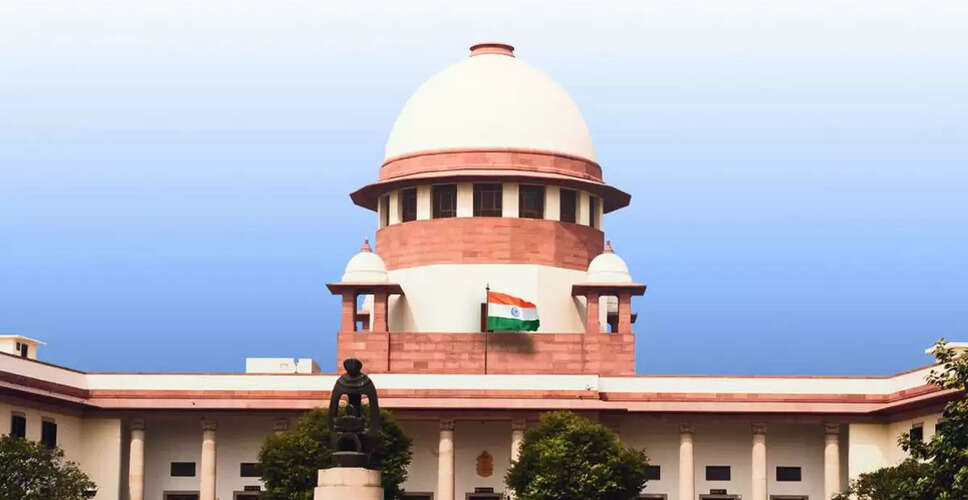
On Tuesday, the Supreme Court instructed the Punjab government to permit the Punjab Kesari Group to restart its printing operations in Ludhiana. This decision was reported by a legal news outlet.
The court emphasized that the state should refrain from taking any punitive measures against the publication of the Punjab Kesari newspaper until the Punjab and Haryana High Court reviews a petition submitted by the media group.
The Punjab Pollution Control Board had ordered the closure of the printing facility on January 15 due to alleged violations related to water pollution, as stated by advocate Mukul Rohatgi during the Supreme Court proceedings.
The Punjab Kesari Group contended that the actions against them were a result of their critical news coverage regarding the chief of the ruling Aam Aadmi Party, Arvind Kejriwal, according to reports.
This media group is known for publishing some of the most widely circulated Hindi and Punjabi newspapers in the region, including Punjab Kesari, Jag Bani, and Hind Samachar.
A bench comprising Chief Justice Surya Kant and Justices Joymalya Bagchi and VM Pancholi ordered the resumption of operations at the printing press following an urgent petition from Jagat Vijay Printers and Hind Samachar Limited.
Hind Samachar Limited serves as the parent company of the Punjab Kesari Group, while Jagat Vijay Printers is a significant printing unit within the group.
Rohatgi informed the Supreme Court that after the publication of articles critical of the state government, various coercive measures were taken against the management, including cutting off electricity and issuing notices from the pollution control board.
He noted that these actions occurred within just two days of the publication of unfavorable articles about the Punjab government.
The advocate also mentioned that the Punjab and Haryana High Court had reserved its judgment on similar petitions from the media group regarding the closure of its hotel and printing press but had not provided any interim relief.
Consequently, the group sought intervention from the Supreme Court.
In the meantime, Punjab's Additional Advocate General Shadan Farasat asserted that all actions taken by the state were lawful, and the High Court's judgment was anticipated shortly.
In response, the Chief Justice remarked that the newspaper should not be halted, while Farasat clarified that only one unit was ordered to close, not the entire newspaper.
The Supreme Court reiterated, 'Do not close the newspaper part.' It acknowledged that while commercial establishments could be temporarily closed, the newspaper's operations must continue.
Farasat also alleged that liquor bottles were discovered at the printing facility, to which Rohatgi countered, questioning the rationale behind closing the paper over two bottles.
The Supreme Court mandated that the newspaper's printing press operate without interruption, pending the High Court's ruling, and this interim order will remain in effect until the High Court's decision is announced and for an additional week to allow for any legal recourse.