
Supreme Court Monitors NTA Reforms to Prevent NEET Exam Paper Leaks
The Supreme Court has announced its intention to closely monitor the National Testing Agency's efforts to implement significant reforms aimed at preventing future paper leaks in the NEET examination. During a recent hearing, the court emphasized the importance of establishing a permanent institutional framework rather than relying on temporary solutions. The ongoing controversy surrounding the NEET exam has raised serious questions about its credibility, prompting the government to form a committee to recommend necessary structural changes. Solicitor General Tushar Mehta indicated progress in proposed reforms but acknowledged the need for more time to present a comprehensive plan. The court's focus remains on ensuring long-term security measures to safeguard the integrity of the examination process.
| Jul 24, 2026, 17:02 IST
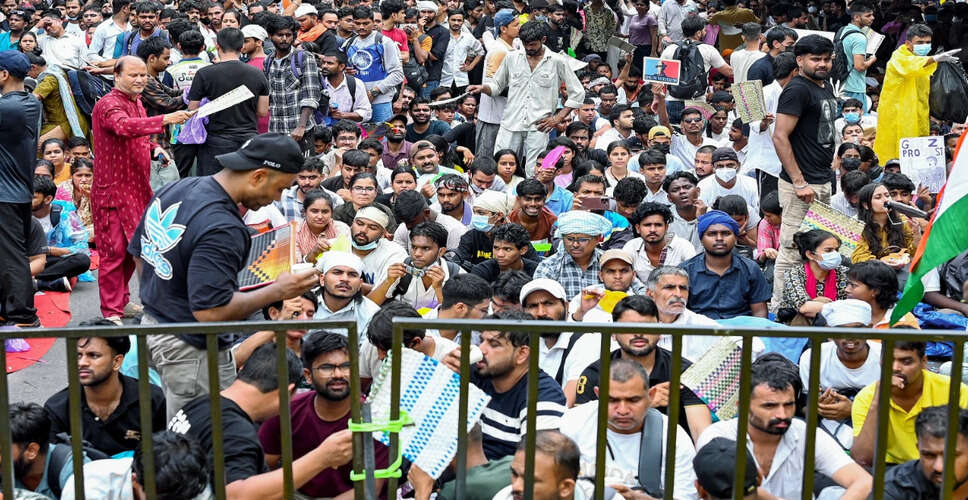

Supreme Court's Vigilance on NEET Exam Integrity
The Supreme Court stated on Friday that it will closely observe the central government's efforts to implement significant reforms within the National Testing Agency (NTA) and to prevent future paper leaks in the NEET examination. The court also cautioned against relying on temporary or makeshift solutions to secure one of India's largest entrance exams. During the hearing of petitions filed by the United Doctors Front and FAIMA Doctors Association regarding structural issues within the NTA, Justices PS Narasimha and Alok Aradhe emphasized the need to focus on establishing a permanent institutional framework rather than seeking short-term fixes during crises. This hearing is taking place amid the ongoing NEET paper leak controversy, which has raised concerns about the credibility of the country's largest medical entrance exam, leading to widespread outrage.
Government's Response and Proposed Reforms
As a result of this controversy, the central government was compelled to form the Radhakrishnan Committee to recommend structural reforms for the NTA and the examination process. Solicitor General Tushar Mehta, representing the government, informed the court that progress has been made on the proposed reforms and requested additional time to present a comprehensive plan. Mehta stated that some advancements have been achieved and asked for a few more days to provide a holistic approach. However, Justice Narasimha made it clear that the court expects permanent institutional reforms rather than temporary solutions.
Long-Term Solutions Needed for Exam Security
Referring to the extraordinary security measures implemented in previous examinations, Justice Narasimha remarked that such measures cannot serve as long-term solutions. During the hearing, Mehta explained that the government would clarify the entire process from the printing of question papers to their transportation and eventual delivery to candidates. The Solicitor General assured that there would be no objections for students at any stage. The bench noted that the government had previously deployed the Air Force to prevent question paper leaks. Justice Narasimha commented that while the Air Force was deployed, it was merely a temporary measure. He further stated, “Such temporary measures have troubled us for years. The court emphasized that the goal now is to institutionalize security measures to eliminate the need for such extraordinary arrangements.”