
Supreme Court Justice Raises Concerns on India's Development Goals
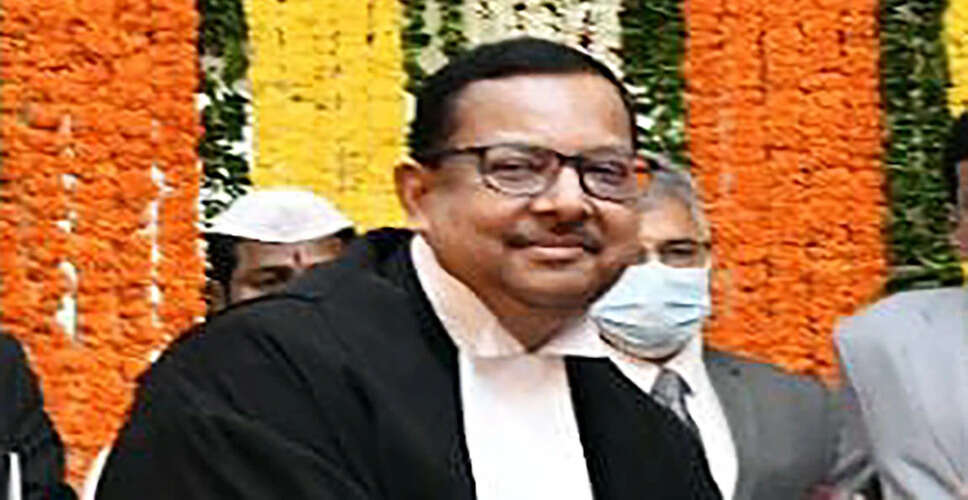
Critical Insights on India's Path to Development
Justice Ujjwal Bhuiyan of the Supreme Court has posed significant questions regarding India's ambition to become a developed nation by 2047. He emphasized that achieving this goal necessitates extensive reforms in both society and governance. Fundamental aspects such as freedom of thought, respect for dissent, and social equality should serve as the foundation for this transformation.
Justice Bhuiyan's Address at the National Conference
While speaking at the inaugural national conference of the Supreme Court Bar Association in Bengaluru, Justice Bhuiyan made it clear that the establishment of a developed nation cannot solely rely on economic growth; it must also be rooted in social justice and the reinforcement of democratic values. He criticized the criminalization of debate and dissent, asserting that a healthy democracy requires respect for diverse opinions and the ability to tolerate criticism.
Concerns Over UAPA Arrests
Justice Bhuiyan also expressed his worries regarding arrests made under the Unlawful Activities (Prevention) Act (UAPA). Citing statistics, he noted that thousands have been detained under this law from 2019 to 2023, yet the conviction rate remains around five percent. This indicates that in most cases, either there was insufficient evidence or the arrests were made hastily.
Justice and the Legal System
He pointed out that holding individuals in jail for extended periods without filing charges contradicts the fundamental principles of justice. He stressed that the principle of 'bail is the rule, and jail is the exception' is weakening, leading to an increased burden on the judicial system and delays in justice.
Vision for a Developed India
Discussing the concept of a developed India, he asserted that resources must be distributed equitably, and economic disparities should be eradicated. He highlighted that this objective is also enshrined in the directive principles of the Constitution. Furthermore, he clarified that the judiciary must maintain its independent role, neither becoming a permanent critic nor a supporter of any government initiative.
Political Resolutions and Judicial Independence
Commenting on political declarations, he remarked that the goal of a developed India is akin to a political resolution, similar to past slogans like 'Remove Poverty.' The judiciary should remain focused on its long-term objectives, suggesting that the year 2050 could be a fitting target, coinciding with the centenary of the Constitution and the Supreme Court.
The Importance of Tolerance
Justice Bhuiyan emphasized the significance of tolerance, referencing a landmark 1986 decision that exempted certain children from singing the national anthem. He stated that such decisions can only be made by courageous judges and reflect the core spirit of our traditions and Constitution. Tolerance should not only be taught but also practiced within society.
Addressing Caste Discrimination
He identified caste-based discrimination and atrocities against Dalits as major obstacles on the path to a developed India. He noted that deep-rooted inequalities still exist in society, and without addressing these issues, development will remain incomplete. For instance, if a family refuses to accept food prepared by a Dalit woman or treats Dalits inhumanely, it cannot be indicative of a developed society.
Conclusion on True Development
In conclusion, he stated that safeguarding the dignity of every individual is the foundation of true development. Until equality, justice, and respect are ensured within society, the dream of a developed India will remain unfulfilled.