
Supreme Court Justice Raises Alarm on Election Integrity and Independence
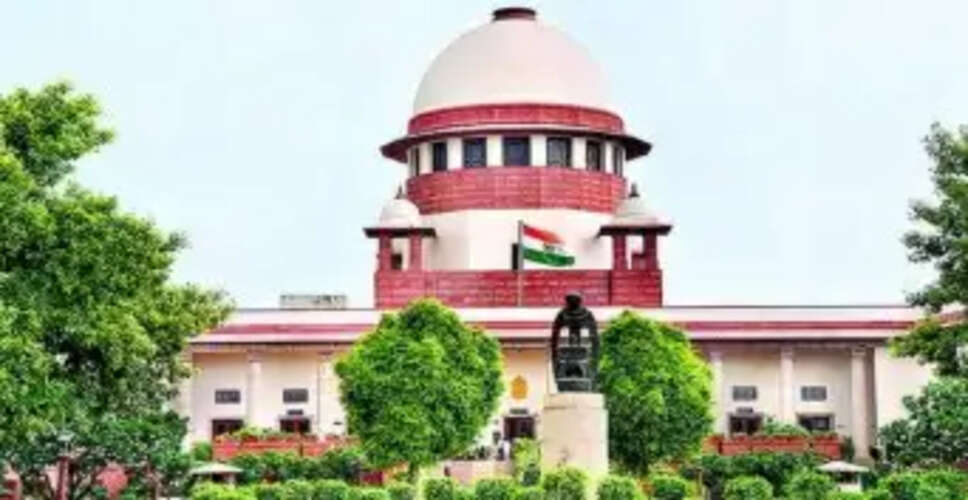
Concerns Over Election Commission's Neutrality
New Delhi: Justice BV Nagarathna of the Supreme Court has expressed serious concerns regarding the independence of the Election Commission, suggesting that the neutrality of elections is compromised when those overseeing the polls rely on the candidates themselves.
Speaking at the Rajendra Prasad Memorial Lecture hosted by Chanakya Law University in Patna, she highlighted the importance of structural independence for electoral oversight.
Referring to a landmark 1995 ruling, which affirmed the Election Commission's role as a vital constitutional authority responsible for maintaining electoral integrity, she stated, “If those conducting elections are beholden to the candidates, the impartiality of the electoral process cannot be guaranteed.”
Justice Nagarathna emphasized that elections are not just routine events; they are essential for establishing political authority.
She noted, “Our constitutional democracy has shown that timely elections facilitate smooth transitions of government. Control over this process equates to control over the political competition landscape.”
The Supreme Court justice pointed out that power is exercised not only through formal institutions but also through the mechanisms that support them, such as elections and public finance.
She argued that a constitutional framework aimed at limiting power must extend beyond traditional forms and address these additional institutions.
Justice Nagarathna remarked that while some institutions may not fit neatly into the classical tripartite model, they are crucial for upholding constitutional order.
She warned that history teaches us that the collapse of constitutional structures often begins with the weakening of their frameworks, leading to rights violations.
She explained, “When institutions cease to hold each other accountable, elections may still occur, courts may operate, and laws may be passed, yet power remains unchecked due to the absence of structural discipline.”
Additionally, she urged the central government to regard states as equals rather than subordinates, reinforcing that the separation of powers is a constitutional arrangement of co-equals.
Justice Nagarathna also advocated for setting aside inter-party conflicts regarding Centre-state relations, stressing that governance should not hinge on which party is in power at the Centre versus the states.