
Supreme Court Issues Notice on Justice Yashwant Varma's Impeachment Challenge
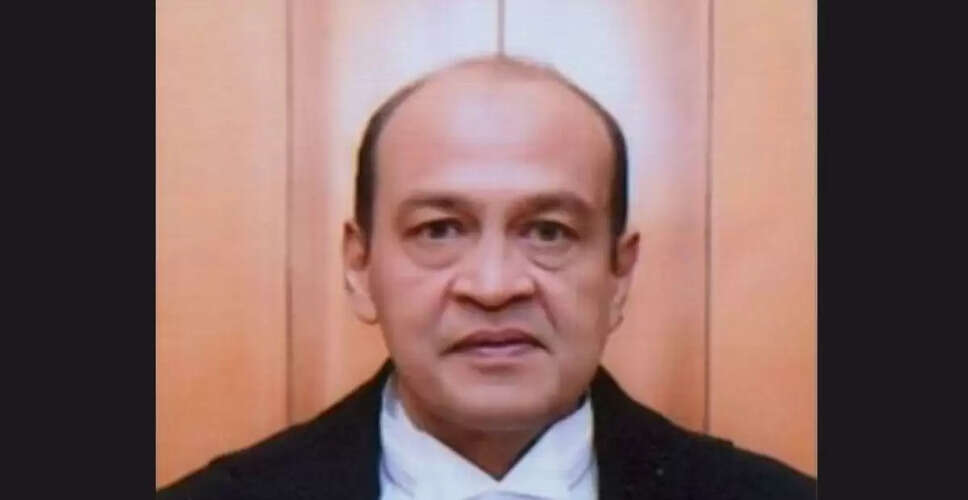
Supreme Court's Response to Impeachment Proceedings
On Tuesday, the Supreme Court responded to Justice Yashwant Varma's petition by issuing a notice to Parliament regarding the committee formed under the 1968 Judges Inquiry Act. This committee is tasked with investigating impeachment proceedings against him related to an unaccounted cash incident, as reported by a legal news outlet.
Justices Dipankar Datta and AG Masih directed the notice to the Speaker and the secretariats of both the Rajya Sabha and Lok Sabha. Varma had submitted his petition anonymously under the alias 'X', according to another news source.
The judge from the Allahabad High Court is contesting the Lok Sabha Speaker's decision to create a three-member judicial committee to probe the allegations against him.
He contended that while impeachment notices were filed in both Houses, Speaker Om Birla unilaterally established the committee without waiting for the Upper House's motion to be admitted, as highlighted by a legal publication.
Varma claimed that this action was a clear violation of the Act's provisions.
In response, the bench questioned how legal experts in Parliament overlooked this procedural lapse. Justice Datta remarked, “With so many MPs and legal experts, how did no one notice this?”
The unaccounted cash was reportedly discovered at Varma's official residence in Delhi during a fire emergency on March 14, while he was serving as a judge at the Delhi High Court. He asserted that he was in Bhopal at the time and that the cash did not belong to him or his family.
Following this incident, he was reassigned to the Allahabad High Court.
A report from the in-house inquiry committee, released on May 3, indicated that there was substantial evidence supporting the allegations against Varma, suggesting that his misconduct warranted removal proceedings.
To initiate impeachment in Parliament, a motion must be signed by 100 Lok Sabha MPs or 50 Rajya Sabha MPs. If the motion is accepted in both Houses, a three-member judicial committee investigates the claims. The Parliament then votes on the impeachment, and if two-thirds support it, the president is advised to remove the judge.
On July 25, the Union Parliamentary Affairs Minister stated that the decision to impeach Varma was unanimous, with 152 MPs from both the ruling coalition and opposition signing the motion.
He noted that the Lok Sabha would address the proceedings before they transition to the Rajya Sabha, in accordance with the Judges Inquiry Act.
However, on August 12, the Lok Sabha Speaker established a three-member committee, which includes Supreme Court Justice Aravind Kumar, Madras High Court Chief Justice Manindra Mohan Shrivastava, and advocate B Vasudeva Acharya, to investigate the allegations.
In November, the committee requested a written statement from Varma regarding the charges, as reported by a legal news source. In his response, the judge sought authenticated copies of the motions presented in both Houses in July and any subsequent orders.
In his Supreme Court petition, Varma claimed he had not received responses to his communications with the Lok Sabha and Rajya Sabha.
The petition also indicated that Varma had informed the committee of his intention to contest the Lok Sabha Speaker's actions.
The committee then instructed him to submit his written response by January 12 and to appear before it on January 24, according to a legal news outlet.
The case is expected to be revisited on January 7.
Previously, Varma had also challenged the in-house committee's report that found him culpable, along with the recommendation made by the then Chief Justice of India, Sanjiv Khanna, to initiate impeachment proceedings.
In August, the Supreme Court dismissed both of Varma's petitions.