
Supreme Court Issues Final Warning to Meghalaya Over Illegal Mining
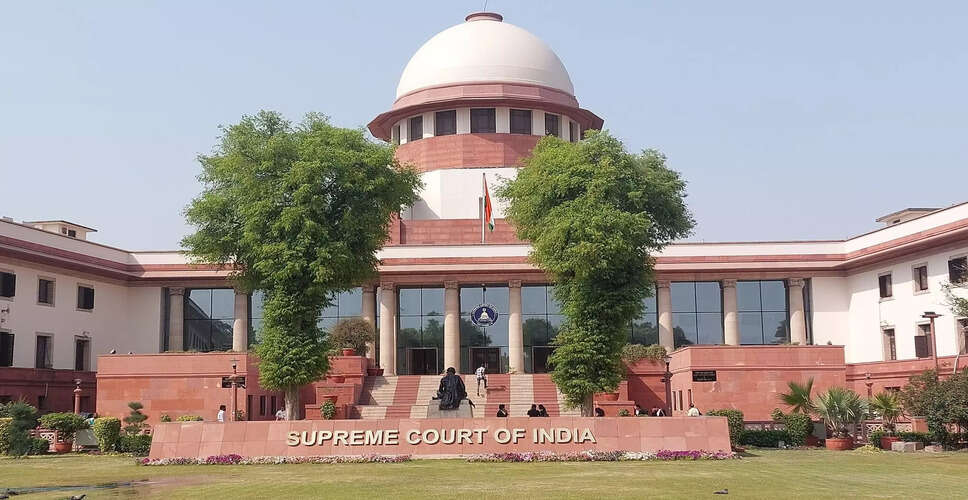
Supreme Court's Directive to Meghalaya
Guwahati, Aug 24: The Supreme Court has provided Meghalaya with a 'final opportunity' to submit an affidavit detailing measures taken to curb illegal mining in the Khasi Hills. The court indicated that if the affidavit does not meet expectations, it may require the Chief Secretary's presence.
This ruling came during a hearing regarding urban flooding in Guwahati, which has been attributed to unlawful mining in the forests of Ri-Bhoi and Khasi Hills in Meghalaya. Senior counsel Nalin Kohli, representing the Assam government, argued that illegal mining in Meghalaya has led to flood-like conditions in Assam, adversely affecting local residents.
The legal representative for Meghalaya claimed that a response had been submitted to the Central Empowered Committee, which recently assessed the situation. However, the Amicus Curiae contested this, stating that despite specific directives to Meghalaya, no response has been received to date.
“We are granting four weeks as a final opportunity for the State of Meghalaya to file its affidavit outlining the actions being taken to prevent illegal mining in the Khasi Hills,” the court stated in its order.
Additionally, the Supreme Court has established a four-member committee tasked with inspecting stone quarries in Assam. This committee will include the Director or Additional Director of the State Mines and Geology department, a scientist from the Ministry of Environment and Forest, a forest officer of at least DFO rank, and a senior official from the Revenue department.
The committee is required to submit its findings within four weeks.
“Furthermore, if the committee discovers any miners engaging in illegal activities without proper authorization, the District Mining Officer must take immediate action to halt such operations,” the court added.