
Supreme Court Implements New Guidelines to Expedite High Court Decisions
The Supreme Court has introduced stringent guidelines aimed at reducing delays in High Court decisions, mandating that judgments be delivered within three months. This initiative addresses the critical issue of prolonged judicial processes that can cause irreparable harm to litigants. Key directives include the requirement for detailed judgments to be uploaded within specified timeframes and immediate communication of bail orders to prison authorities. The court's actions are expected to enhance public trust in the legal system by ensuring timely justice. This article delves into the implications of these new rules and their potential impact on the judiciary.
| May 30, 2026, 14:02 IST
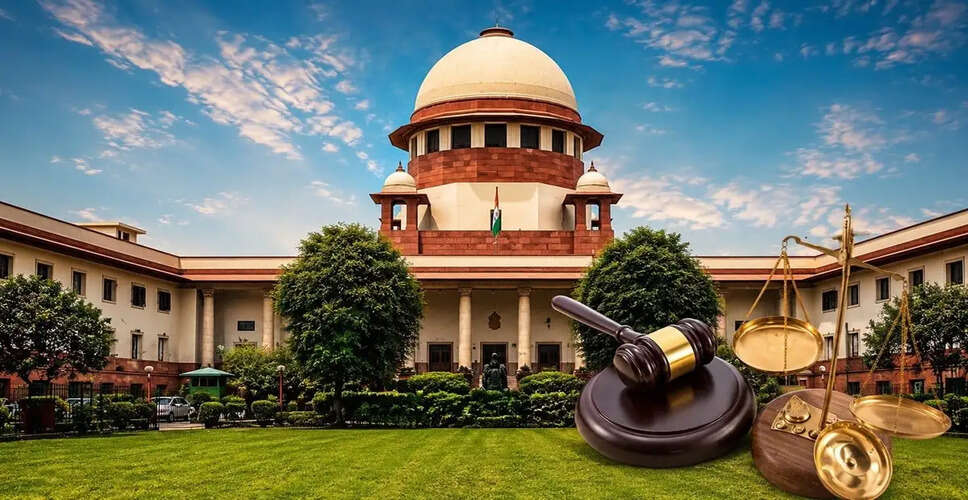

Supreme Court's Firm Stance on Delays in Judicial Decisions
The Supreme Court has taken a strong stance against delays in judicial rulings by issuing new mandatory guidelines for all High Courts across the country. During a hearing on a petition addressing the issue of delayed uploads of High Court decisions, the bench led by Chief Justice Surya Kant and Justice Joymalya Bagchi emphasized that reserved judgments must be delivered within a maximum of three months. The court highlighted that delays in justice can cause irreparable harm to litigants, which cannot be compensated. Additionally, the court has mandated that bail petitions must be decided on the same day they are presented. If a decision is reserved under special circumstances, it must be announced the following day and uploaded to the court's website.
Key Points of the Decision
Five Important Aspects of the Ruling
1. Reasons Must Be Provided Within 15 Days: If the court only announces the operative part of the judgment, a detailed decision with reasons must be uploaded within 15 days. The date of the operative part will be considered the date of the judgment.
2. Upload Within 24 Hours: After the reasoned judgment is pronounced in open court, it must be made available on the High Court's website within 24 hours to avoid delays for the parties involved.
3. Public Dates: The date when the arguments are concluded and the judgment is reserved must be displayed on the High Court's website, ensuring parties are aware of how long the case has been pending.
4. Two-Day Deadline: If a judgment is not delivered within four months of being reserved, parties can bring the matter before the Chief Justice of the High Court. Such applications must be listed within two days.
5. Monitoring Required: Chief Justices of High Courts must establish an administrative system to regularly monitor pending reserved cases. Compliance reports regarding bail release orders must also be submitted to the High Court.
Understanding Article 142 of the Constitution
What Does Article 142 Entail?
Article 142 of the Constitution grants the Supreme Court special powers to deliver complete justice. This provision allows the Supreme Court to overturn any decision and provide justice as needed. The Supreme Court has previously exercised this power multiple times, including in cases involving students from Madhya Pradesh.
Background of the Case from Jharkhand High Court
Origin of the Issue Regarding Delayed Decisions
The matter arose from delays in delivering and uploading judgments at the Jharkhand High Court. A case was presented to the Supreme Court where a decision was reserved for nearly two years after the hearing was completed. The operative part was eventually announced on December 4, 2025, but the reasoned judgment was not provided in a timely manner. During the hearings, the Jharkhand High Court reported 67 cases where decisions were pending after being reserved. Recognizing the seriousness of the issue, the Supreme Court requested data from all High Courts and issued nationwide guidelines.
Supreme Court's Inquiry into Pending Decisions
Request for Information on Pending High Court Decisions
Last May, the Supreme Court expressed concern over the Jharkhand High Court's delay in 67 criminal appeals. At that time, a two-judge bench, including Justice Surya Kant, was reviewing the matter. The court deemed this situation alarming and requested information on pending decisions from all High Courts, indicating that it would formulate essential guidelines. The issue of bail is particularly sensitive, and the Supreme Court has consistently affirmed that the right to a dignified life and personal liberty under Article 21 of the Constitution is paramount. Therefore, it is unacceptable for bail to be granted while other formalities cause delays. The Supreme Court's recent directives raise hopes for timely justice, which could enhance public trust in the judiciary.