
Supreme Court Hears Election Commission's Authority on Citizenship for Voter Eligibility
Election Commission's Stance on Citizenship Verification
On Tuesday, the Election Commission informed the Supreme Court that it has the right to verify the citizenship status of individuals to determine their eligibility for inclusion in voter lists, as reported by a leading news outlet.
Advocate Rakesh Dwivedi, representing the Election Commission, argued before Chief Justice Surya Kant and Justice Joymalya Bagchi that the electoral registration officer possesses the authority to make decisions under Article 326 of the Constitution, along with the Representation of People Act and the Registration of Electors Rules.
Article 326 mandates that elections for the Lok Sabha and state Assemblies are conducted based on adult suffrage.
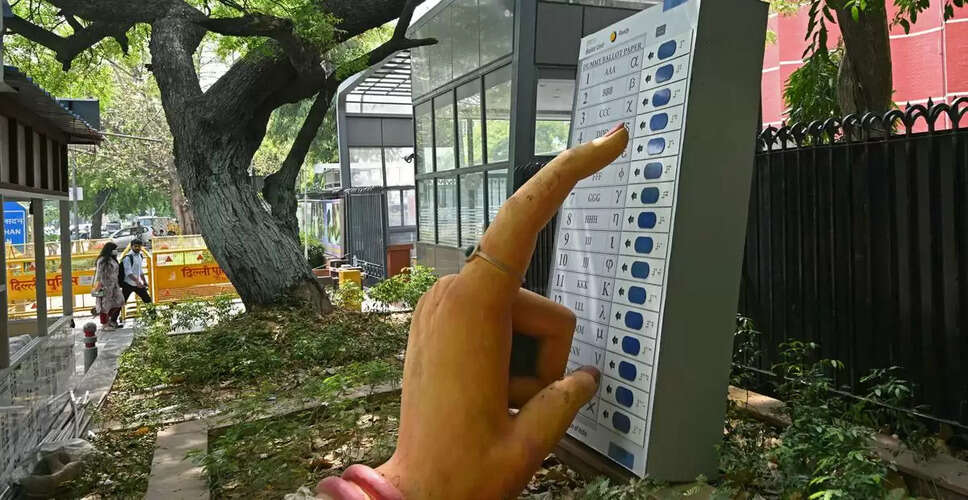
The bench is currently reviewing petitions challenging the legitimacy of the special intensive revision of electoral rolls being carried out nationwide.
Dwivedi pointed out that in various regulatory frameworks, such as those related to mining leases and other statutory benefits, citizenship verification is a requirement that can be assessed by the appropriate authority.
During the hearing, the bench inquired whether the Citizenship Act allows the electoral registration officer to report findings of non-citizenship to the Union government, potentially revoking voting rights before a decision is made.
According to Dwivedi, the Union government's decision would focus on whether an individual is entitled to remain in India or should be deported, emphasizing that the Election Commission holds the authority regarding electoral rolls.
He stated, "That’s sufficient to remove someone from the electoral roll," as quoted by the news outlet.
Dwivedi also mentioned that there are adequate safeguards in place for individuals who may feel aggrieved by such actions.
He further explained that Article 326 does not clarify the process for determining citizenship, while Article 5 of the Constitution outlines who qualifies as a citizen of India at its inception.
Article 5 defines citizenship as of January 26, 1950, but does not address the ongoing changes in citizenship status over time.
In response, the Chief Justice remarked that the terms used in Articles 5, 6, and 7 are transitional, reflecting the need for residents at the time of the country's formation to decide their final settlement.
Article 6 provides citizenship rights to certain individuals who migrated from Pakistan to India post-Partition, while Article 7 pertains to those who moved from India to Pakistan after March 1, 1947.
Dwivedi noted that these articles do not offer criteria for determining citizenship but highlight the significance of domicile, residence, and birth in India, with birth being the most crucial factor.
The bench is set to continue its deliberations on this matter on Thursday.
The special intensive revision of electoral rolls is currently taking place in 12 states and Union Territories.
In Bihar, where the revision was completed ahead of the upcoming Assembly elections in November, approximately 47 lakh voters were removed from the final electoral roll published on September 30.
Concerns have been raised regarding the potential exclusion of eligible voters from the rolls following this announcement in Bihar.