
Supreme Court Hears Case Challenging Detention of Activist Sonam Wangchuk
The Supreme Court is currently reviewing a pivotal case concerning the detention of activist Sonam Wangchuk under the National Security Act. His wife has filed a petition challenging the legality of his detention, which was prompted by protests in Ladakh. Senior advocate Kapil Sibal argues that the grounds for detention were not properly communicated and that the process violated constitutional rights. The case raises critical questions about legal procedures and the treatment of activists in India, making it a significant matter for public interest and legal scrutiny.
| Jan 8, 2026, 21:55 IST
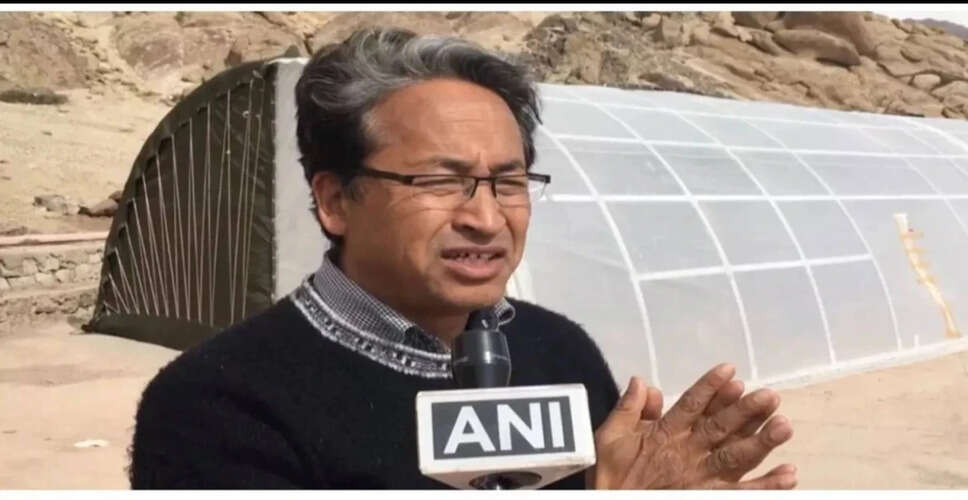
Supreme Court Proceedings on Sonam Wangchuk's Detention
On Thursday, the Supreme Court engaged in an extensive discussion regarding a significant case related to Ladakh, where social activist Sonam Wangchuk's detention under the National Security Act (NSA) is being contested. This petition was filed by his wife, Dr. Geetanjali Angmo. According to reports, Justices Arvind Kumar and Prasanna Varale presided over the hearing during the afternoon session, where senior advocate Kapil Sibal presented arguments on behalf of the petitioner.
It is noteworthy that Wangchuk was detained on September 26, 2025, following recent protests in Ladakh. The government claims that these demonstrations turned violent, disrupting public order. However, Sibal argued in court that the detention order was based on four videos that were neither timely nor fully provided to Wangchuk. He emphasized that the law is clear: if the grounds for detention are stated, but the supporting documents are not provided, it constitutes a direct violation of Article 22 of the Constitution.
Sibal further contended that the grounds for detention were presented on September 29, while the videos were neither available on a pen drive nor were copies provided. Instead, only links to the videos were shared, which cannot be considered a valid means of defense. He noted that Wangchuk had repeatedly requested these videos through letters during his detention, but they were never made available. Even his wife was left waiting with assurances that the relevant documents would be provided, but nothing was delivered.
According to available information, Sibal informed the court that there was a 28-day delay in providing the grounds for detention, which violates the legally mandated timeframe. He asserted that the purpose of detention cannot be to deprive an individual of effective representation. If documents are provided just before a meeting of the advisory board, it merely becomes a formality, while the Constitution demands a genuine and meaningful opportunity.
Sibal also raised questions regarding the fundamental allegations of detention. He pointed out that Wangchuk had been on a hunger strike since September 11, and when violence erupted in certain areas on September 24, he broke his fast to publicly call for an end to the violence. Sibal compared this speech to Mahatma Gandhi's decision to halt the movement after the Chauri Chaura incident. With the court's permission, this video was played in court, showing Wangchuk delivering a clear message against violence.
Sibal argued that the speech advocating for the cessation of violence was overlooked, and the detention order was issued based solely on selective material, which he deemed malicious. He stated that this movement was rooted in the philosophy of non-violent satyagraha, and Wangchuk had repeatedly clarified that the struggle would not involve stones or weapons but would be conducted peacefully.
It was also mentioned that actions against Wangchuk began abruptly in August-September 2025, leading to investigations, notices, and other pressures on the institutions associated with him. Sibal characterized this as a matter that should be viewed in a broader context, asserting that the detention order was issued without adhering to legal procedures and constitutional safeguards, making it unsustainable and subject to cancellation.