
Supreme Court Halts Publication of NCERT Textbook Over Judicial Corruption Claims
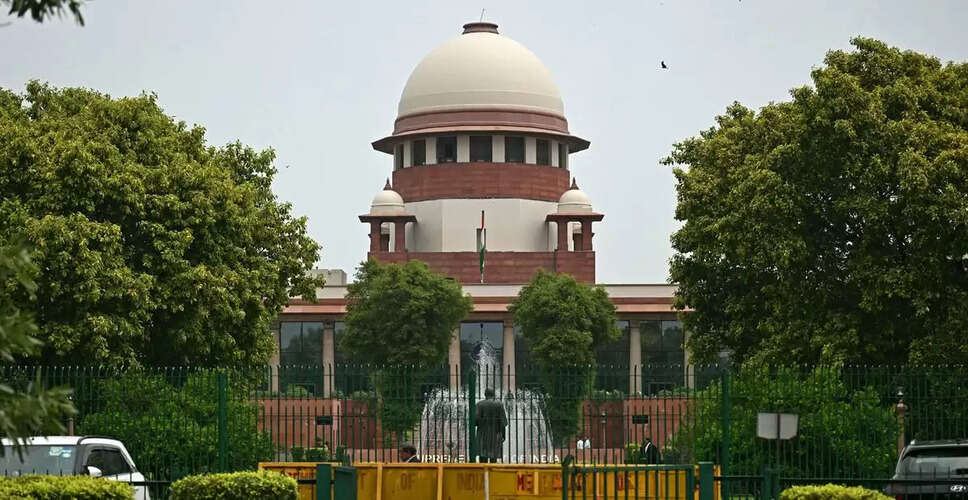
Supreme Court's Decision on NCERT Textbook
On Thursday, the Supreme Court issued a ban on the publication and reprinting of a new Class 8 social science textbook from the National Council of Educational Research and Training (NCERT), which contained a chapter addressing "corruption in the judiciary." This decision was reported by various news outlets.
A bench led by Chief Justice Surya Kant, along with Justices Joymalya Bagchi and Vipul M Pancholi, instructed both the Union government and state education departments to ensure that all versions of the book, whether printed or digital, are eliminated from public access.
The NCERT serves as an advisory body to the Union government regarding school curricula.
The controversial chapter titled "The role of the judiciary in our society" identified "corruption at various levels of the judiciary" as one of the significant challenges facing the judicial system.
Later that day, the Supreme Court acknowledged that it had taken suo moto cognizance of the issue, with the Chief Justice asserting, "I will not allow anyone to tarnish the integrity of the institution and defame it."
Additional Details:
Solicitor General Tushar Mehta, representing the Union government, expressed regret to the Supreme Court, confirming that the NCERT had withdrawn the textbook.
However, the bench noted that the NCERT's press release lacked any form of apology. It mandated that all copies of the book in circulation—whether in storage, retail locations, or educational institutions—be confiscated and removed from public access. Furthermore, it stated that no classes should be conducted using this textbook.
The court issued a contempt notice to the Department of School Education and NCERT Director Dinesh Prasad Saklan, requiring him to provide the names of individuals involved in the chapter's creation and the minutes from the meeting where it was discussed.
The bench criticized the NCERT director's response to the controversy, labeling it as "contemptuous and reckless."
It was suggested that there seemed to be a deliberate attempt to undermine the authority and dignity of the institution, with the bench noting that the chapter was published without proper oversight, which diminished the judiciary's stature.
The court indicated it might form a panel to determine accountability after reviewing compliance reports from the NCERT and government bodies.
The textbook, which was available for purchase earlier in the week, claimed that despite existing codes of conduct for judges and mechanisms for lodging complaints, citizens still encounter corruption within the judiciary.
In contrast, the previous edition of the textbook merely outlined the judiciary's role, court structures, and access, without mentioning corruption, although it did address delays in hearings.