
Supreme Court Halts Calcutta High Court's Disqualification of Mukul Roy
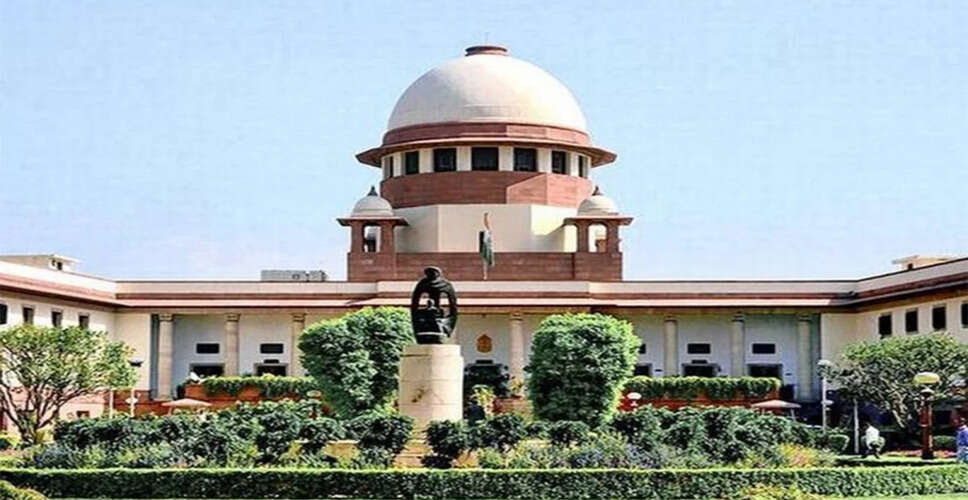
Supreme Court's Interim Order
The Supreme Court has issued a stay on the Calcutta High Court's ruling that declared Mukul Roy ineligible as a member of the West Bengal Assembly. Roy, who was elected in 2021 on a Bharatiya Janata Party (BJP) ticket, later returned to the ruling All India Trinamool Congress (TMC). The bench, comprising Chief Justice D.Y. Chandrachud and Justice Joymalya Bagchi, delivered this interim order just months before the upcoming state elections and following the conclusion of the Assembly's term in May.
The court has summoned Assembly Speaker Biman Banerjee and BJP leaders Suvendu Adhikari and Ambika Roy, who had filed a petition in the High Court seeking Roy's disqualification. The bench has instructed that counter-affidavits be submitted within four weeks, followed by replies within two weeks.
Background of the Case
The appeal in the Supreme Court was filed by Roy's son, Subhranshu Roy, citing his father's hospitalization. He argued that the Speaker had thoroughly examined the evidence presented and dismissed the disqualification petition in June 2022. However, on November 13, the Calcutta High Court overturned the Speaker's decision. Adhikari and Ambika Roy referenced a video from June 2021, allegedly showing Mukul Roy and his son joining the TMC in the presence of Chief Minister Mamata Banerjee.
Subhranshu Roy contended that the Speaker dismissed the petition due to the lack of certification under Section 65B of the Evidence Act for the video. His lawyer, Advocate Preetika Dwivedi, stated that the High Court recognized that such certification is not necessary for determining disqualification under the Tenth Schedule of the Constitution (Anti-Defection Law).
Concerns Over Electronic Evidence
The Supreme Court expressed concerns regarding the reliance on unverified electronic evidence, emphasizing the need to ascertain the authenticity of such material in the age of artificial intelligence. Senior Advocate Gaurav Agarwal, representing the BJP leaders, argued that Roy had clearly switched parties after being elected on a BJP ticket and could not remain an MLA.