
Supreme Court Halts Apple Tree Removal in Himachal Pradesh, Balances Judicial Restraint and Executive Power
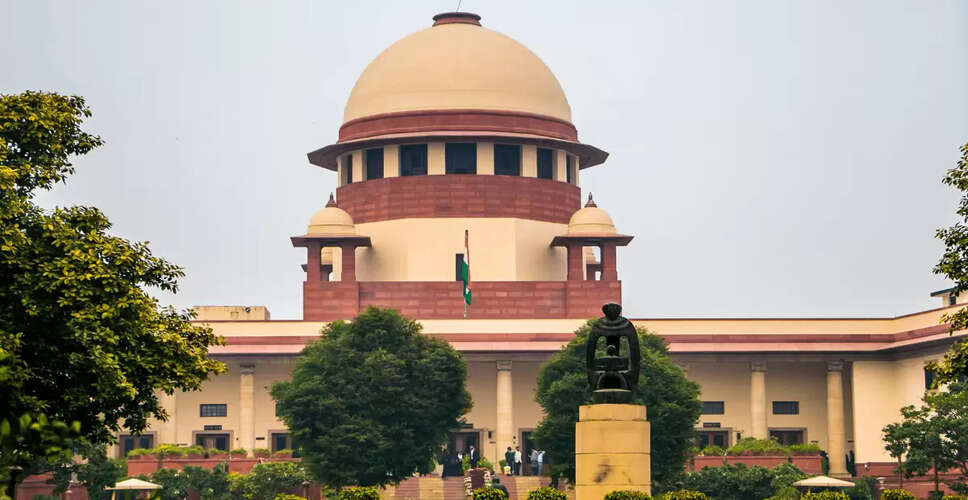
Supreme Court's Intervention on Apple Trees
Sunil Chadha
Shimla: In a significant ruling, the Supreme Court on Tuesday overturned the Himachal Pradesh High Court's directive to cut down fruit-bearing apple trees on encroached forest land. The court emphasized that its decision does not provide blanket immunity for encroachments nor does it prevent the state government from taking lawful action.
In its ruling, the apex court advised the high court to refrain from entering the policy-making arena while reminding the state government of its authority to address encroachments, albeit with consideration for the welfare and livelihoods of affected individuals.
The bench, led by Chief Justice Surya Kant and Justice Joymalya Bagchi, criticized the high court for issuing orders with severe implications, particularly for marginalized communities reliant on apple orchards for their livelihoods. The Supreme Court highlighted that the decision to remove fruit-bearing trees is inherently a policy issue that the high court should not have intervened in.
Recognizing the complexities surrounding rehabilitation, livelihood, and environmental concerns, the bench stated that such issues are more appropriately managed by the executive through policy initiatives rather than through broad judicial mandates.
Government's Authority to Act Within Legal Framework
Furthermore, the Supreme Court clarified that its ruling should not be interpreted as a limitation on the Himachal Pradesh government's ability to act against forest land encroachments. The court affirmed that the state can proceed legally but must be aware of its responsibilities as a welfare state.
The court recommended that the state government develop a thoughtful proposal to support landless and marginalized families and present it to the Centre for necessary assistance, indicating that enforcement and welfare should be aligned.
Ecological and Economic Considerations
The Supreme Court's decision came in response to petitions from the state government and former Shimla Deputy Mayor Tikender Singh Panwar, along with activist-advocate Rajiv Rai, who contested the high court's order from July 2. The petitioners cautioned that large-scale removal of apple trees, especially during the monsoon season, could increase the risk of landslides and soil erosion in the ecologically sensitive region.
They also pointed out that apple orchards are vital to Himachal Pradesh's rural economy, supporting thousands of families, and that indiscriminate tree cutting without a thorough environmental impact assessment would infringe upon the right to livelihood.