
Supreme Court Grants Bail to Kailash Ramchandani in 2019 Gadchiroli Blast Case
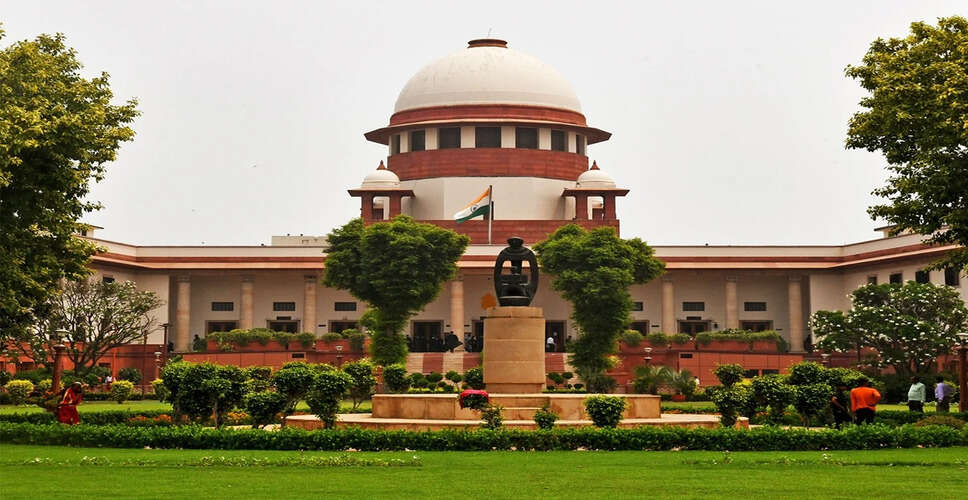
Supreme Court Decision on Bail
The Supreme Court has granted bail to Kailash Ramchandani, who was accused of playing a significant role in supplying wires and other explosive materials to Maoists involved in the 2019 Gadchiroli blast that resulted in the deaths of 15 police officers and one civilian. The bench, led by Chief Justice of India N.V. Ramana and Justice Joymalya Bagchi, noted that while the charges against Ramchandani may appear serious, he is not a notorious criminal and lacks a criminal history that could influence the ongoing trial.
Conditions of Bail
The court highlighted that the prosecution intends to question over 200 witnesses, indicating that the trial could take a considerable amount of time. While granting bail, the court imposed six conditions, including a directive for Ramchandani to remain within his ancestral home in Gadchiroli, except when required to appear in the lower court in Bombay. Additionally, he must report weekly to the local police station and provide his mobile number to the authorities. The court also stated that neither Ramchandani nor his lawyer should request delays or adjournments in the trial.
Restrictions on Contact
Furthermore, the court mandated that while on bail, Ramchandani must not have any direct or indirect contact with co-accused individuals. If he is found violating this condition, the authorities have the right to revoke his bail. Initially, the court had granted him interim bail, with the next hearing scheduled for the end of March. However, to expedite the case's resolution, regular bail was granted.
Ramchandani was arrested on June 29, 2019, and faces charges under various sections of the Indian Penal Code, including 302 and 353, as well as provisions of the Arms Act, the Explosive Substances Act, the Maharashtra Control of Organised Crime Act (MCOCA), and the Unlawful Activities (Prevention) Act (UAPA).
Opposition to Bail
During the hearing, Assistant Government Pleader Aishwarya Bhati, representing the Maharashtra state and the NIA, opposed Ramchandani's bail application. She argued that he allegedly instructed the attackers to detonate an improvised explosive device (IED) and emphasized his direct involvement, claiming that he supplied walkie-talkies and other equipment to the Maoists. Bhati also mentioned that Ramchandani had visited forest areas and met with individuals accused of the 2019 blast.