
Supreme Court Grants Bail to Convicts in Bilkis Bano Case After 17 Years
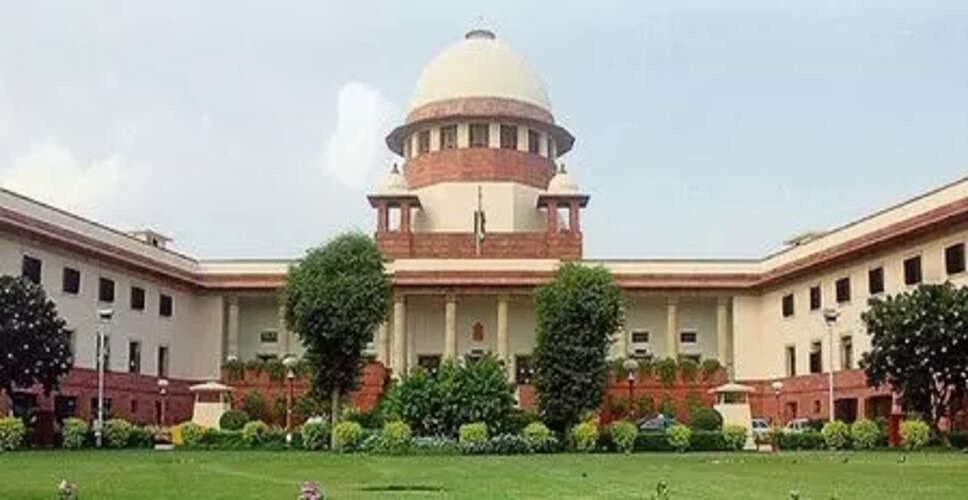

Supreme Court Decision on Bilkis Bano Case
A file image of the Supreme Court (Photo: @IANS)
New Delhi, Nov 16: The Supreme Court has decided to suspend the life sentences of two individuals convicted in the gang rape of Bilkis Bano and the murder of seven of her relatives during the Gujarat riots in 2002, allowing them to be released on bail.
A bench comprising Justices MM Sundresh and PB Varale observed that Bipin Chandra Joshi and Pradeep Mordhiya had been imprisoned for over 17 years.
"After hearing the arguments, it is sufficient to mention that the appellants have been incarcerated for more than 17 years, and one of them has a significant disability. There are indeed legal and factual matters to be resolved in this appeal," stated the Supreme Court in its order dated October 28, which has now been made public.
"Considering the aforementioned points and the complexities involved in this appeal, we are suspending the sentence and granting bail to the appellants under conditions set by the relevant trial court," the bench further noted.
Senior advocate Siddharth Luthra argued that one of the convicts was not named in the initial FIR and was implicated nearly three years after the riots.
In contrast, Additional Solicitor General Raja Thakre strongly opposed the bail request, asserting that both the high court and trial court had thoroughly evaluated the pertinent evidence, especially given the severity of the crime.
Bilkis Bano was just 21 years old and five months pregnant when she was gang-raped while fleeing the violence of the communal riots triggered by the Godhra train burning incident in February 2002.
Among the seven family members who were murdered was her three-year-old daughter.
Joshi and Mordhiya are part of the 11 convicts whose remission was annulled by the Supreme Court in 2024.
The other convicts include Govind Nai, Ramesh Chandana, Mitesh Bhatt, Bakabhai Vohania, Kesarbhai Vohania, Jaswant Nai, Radheshyam Shah, Rajubhai Soni, and Shailesh Bhatt.
Both Joshi and Mordhiya were found guilty by the trial court under various sections of the Indian Penal Code, including unlawful assembly, rioting, murder, and rape, and were sentenced to life imprisonment with fines.
On January 8, 2024, the Supreme Court invalidated the remission granted by the Gujarat government to the 11 convicts, criticizing the state for being "complicit" with the accused and misusing its authority.
The court condemned the Gujarat government for overstepping its bounds regarding remission powers, which it stated belonged to the Maharashtra government.
The case involving Bilkis Bano was moved from a Gujarat court to one in Mumbai, with the Supreme Court affirming that the Maharashtra government held the authority to grant remission.