
Supreme Court Faces New Application Amid TCS Nashik Religious Conversion Allegations

New Developments in TCS Nashik Case
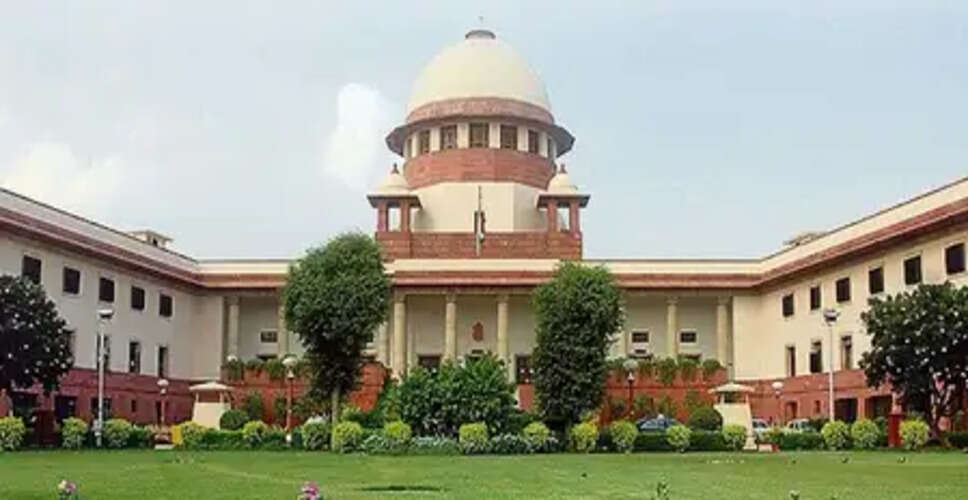
New Delhi: In light of the ongoing political uproar regarding allegations of forced religious conversions and sexual misconduct at Tata Consultancy Services' (TCS) Nashik branch, a new application was submitted to the Supreme Court on Thursday. This application references the incidents as proof of 'organized religious conversion' and calls for more robust judicial action against illegal conversions nationwide.
The application, filed in the case titled 'In Re: The Issue of Religious Conversion', argues that the reported events at TCS's Nashik office highlight the urgent need for enhanced legal protections against conversions executed through coercion, fraud, or inducement.
This development follows claims from several female employees at TCS's Nashik location, who reported harassment by senior personnel from 2022 to 2026, including alleged pressure to change their religious beliefs.
"The organized religious conversion in Nashik has disturbed the conscience of citizens across the nation," the application states, emphasizing that such actions threaten the principles of sovereignty, secularism, democracy, equality, justice, liberty, fraternity, unity, and national integration.
Advocate Ashwini Kumar Upadhyay, the applicant, pointed out that Article 25 of the Constitution does not safeguard conversions achieved through deceit, force, or coercion, asserting that the right to propagate one's faith does not equate to the right to convert others against their will.
Referencing previous Supreme Court rulings, the application clarifies that Article 25 only grants the right to 'transmit or spread' one's religion, not a fundamental right to convert others.
The plea further argues that forced religious conversions, especially when conducted systematically, should be classified as organized crime, as they often involve coercion, fraud, intimidation, psychological manipulation, and exploitation of vulnerable individuals.
Additionally, the application requests the Supreme Court to consider organized forced conversion campaigns as potentially qualifying as 'terrorist acts' under Section 113 of the Bharatiya Nyaya Sanhita (BNS) if they involve systematic violence or coercion aimed at undermining public order or national integrity.
The applicant has urged the Union government to establish stricter legal frameworks to regulate and prevent unlawful religious conversions.
In the meantime, the TCS Nashik incident has sparked calls for a thorough investigation from various political factions, with differing opinions on whether the company's institutional accountability should be scrutinized.
Shiv Sena spokesperson Sanjay Nirupam labeled the allegations as 'serious and alarming', asserting that Hindu women employees at the Nashik office faced pressure to convert and were subjected to exploitation.
"We want to question TCS — as a prestigious global service provider, how could such misconduct occur right under your supervision without your knowledge?" Nirupam remarked.
The Bharatiya Janata Party has also demanded decisive action, with MLC Chitra Wagh alleging coercion in the reported conversions, while Union Minister Ramdas Athawale stated that while voluntary conversion is permissible, coercive conversion must be addressed firmly.
Reports indicate that the controversy began in March when a woman accused a TCS colleague of engaging in a physical relationship under false pretenses of marriage, leading to multiple additional complaints and several FIRs being filed.
So far, police have arrested at least six employees in connection with the case, and Maharashtra authorities are investigating whether any organized coercion or misconduct occurred within the company's premises.