
Supreme Court Empowers Gender Equality in Indian Armed Forces with Landmark Ruling
In a groundbreaking decision, the Supreme Court has ruled that female Short Service Commission officers are entitled to Permanent Commission in the Indian Armed Forces. This ruling addresses systemic discrimination and mandates reforms in evaluation processes. The court's findings reveal flaws in the military's assessment system, which has historically disadvantaged women. With directives aimed at ensuring equal opportunities, the court emphasizes the need for transparency and fairness in evaluations. This landmark ruling not only rectifies past injustices but also paves the way for a more inclusive future for women in the armed forces. Discover the full implications of this significant ruling and its impact on gender equality in the military.
| Mar 24, 2026, 13:04 IST
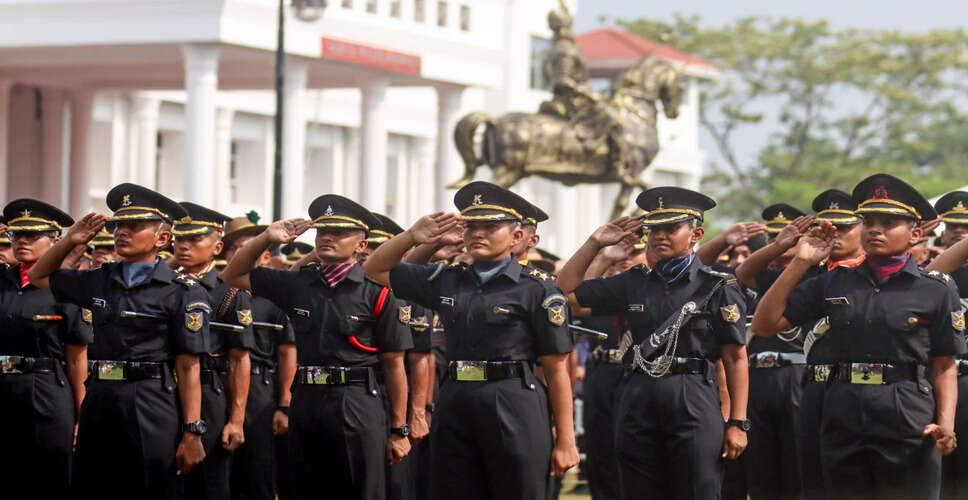
Historic Ruling on Gender Equality in Armed Forces
The Supreme Court has made a significant ruling today, enhancing gender equality within the Indian Armed Forces. The court affirmed that female Short Service Commission (SSC) officers are entitled to Permanent Commission (PC). It highlighted the military's "flawed and discriminatory" evaluation system and issued strict directives for systemic reforms.
The court exercised its extraordinary powers to deliver justice, revealing systemic discrimination faced by female officers, who were subjected to arbitrary limits and unfair evaluation processes.
Court's Findings on Discriminatory Practices
The Supreme Court declared that the annual cap of 250 female officers for Permanent Commission is arbitrary and cannot be deemed sacred or immutable. It issued comprehensive directives to rectify past injustices and ensure equal opportunities in the future.
Under the Short Service Commission, officers are recruited for a decade, extendable to 14 years. At the end of this term, they must leave the army unless granted Permanent Commission, which limits their pension rights and career advancement opportunities.
Permanent Commission Offers Career Stability
In contrast, a Permanent Commission provides a full career in the armed forces, typically lasting 20 years or more until retirement. Officers are entitled to pensions and all retirement benefits, with opportunities for promotion to senior leadership roles.
Considering the denial of Permanent Commission to female officers as discriminatory, the court invoked its powers under Article 142 of the Constitution, noting that evaluations of women in both the army and navy were conducted unfairly.
Judicial Insights on Evaluation Processes
A bench led by Chief Justice Surya Kant remarked, "Male SSC officers cannot expect Permanent Commission to be exclusive to men. The denial of Permanent Commission to female SSC officers stemmed from deep-rooted discrimination in the evaluation system."
The court also pointed out serious flaws in the evaluation process, indicating that the Annual Confidential Reports (ACRs) of female officers were carelessly assessed without proper deliberation, based on the preconceived notion that they would never qualify for Permanent Commission.
Addressing Discrimination and Ensuring Justice
The court emphasized that the ACRs of women were prepared under the assumption that they would never be eligible for Permanent Commission, adversely affecting their evaluations. These criteria placed them at a disadvantage compared to their male counterparts.
Highlighting the consequences of such discrimination, the court directed that female officers entitled to Permanent Commission would be considered to have completed the necessary 20 years of service and would be eligible for pensions and subsequent benefits. This relief will also extend to those previously considered by selection boards but deemed ineligible.
Clarifications on Selection Boards and Future Implications
The court clarified that the Permanent Commission granted to SSC officers through selection boards in 2019, 2020, and 2021 will remain unchanged.
However, this does not apply to female Short Service Commission officers and interveners who are part of the Judge Advocate General (JAG) and Army Education Corps (AEC) cadre.
Navy and Air Force Considerations
In the case of the Navy, the bench ruled that eligible female officers would be granted Permanent Commission based on medical fitness as a one-time measure. It also stated that women officers recruited after 2009 would be entitled to Permanent Commission.
Defending the Navy's "Dynamic Vacancy Model," the court criticized the Ministry of Defence and the Navy for failing to disclose selection criteria and numbers, noting that this lack of transparency created issues, especially for male officers.
Final Remarks on Evaluation Processes
Regarding the Air Force, the court stated that the service duration of officers who were never given a fair chance for evaluation should not be used against them for denying Permanent Commission. However, it noted that reinstating them for Permanent Commission or reconsidering them would not be operationally effective, yet emphasized that this should not be an excuse to deprive them of benefits.
The court also ordered a comprehensive review of evaluation processes across all three armed forces to eliminate structural biases and ensure that female officers are not unjustly disadvantaged.
Utilizing its special powers to "deliver justice," the Supreme Court aimed to address the shortcomings in implementation and ensure that past discrimination does not continue to harm the careers of female officers.